Choose from our wide range of
frames and lenses










Reading glasses help correct presbyopia, an age-related condition that makes close-up vision blurry. Most people need reading glasses starting in their 40s, with strengths ranging from +0.75 to +2.75 diopters depending on age, vision needs, and comfort.
Why You Need Reading Glasses
As you age, the natural lens of your eye becomes less flexible, making it harder to focus on nearby objects. This condition is called presbyopia, and it affects nearly everyone starting in their early to mid-40s.
Common signs you may need reading glasses include:
- Difficulty reading small print
- Needing to hold reading material farther away
- Eye strain or headaches after close work
- Blurry vision when using a phone or computer
Presbyopia is a normal part of aging and does not indicate eye disease.
How Reading Glasses Work
Reading glasses are not just magnifiers. They use convex lenses to add focusing power, helping your eyes see close objects more clearly.
The strength of reading glasses is measured in diopters, which indicate how much optical power the lens provides.
What Are Diopters?
A diopter is the unit used to measure lens strength. Reading glasses are labeled with a plus sign (+) followed by a number and decimal (for example, +1.50).
Higher diopter numbers mean stronger lenses designed for closer viewing distances.
You may also like
All About Reading Glasses Strength
There is no single “average” reading glasses strength. The right power depends on your age, vision, and how close you hold reading material.
Typical reading glasses strength ranges by age:
- Ages 40–49: +0.75 to +1.50
- Ages 50–59: +1.50 to +2.25
- Ages 60 and up: +2.25 to +2.75
Many people benefit from owning more than one pair for different tasks, such as reading versus computer work.
How Do I Know What Strength Reading Glasses to Get?
The best way to determine what strength readers you need is through an eye exam.
However, you can estimate your reading glasses strength using a reading chart.
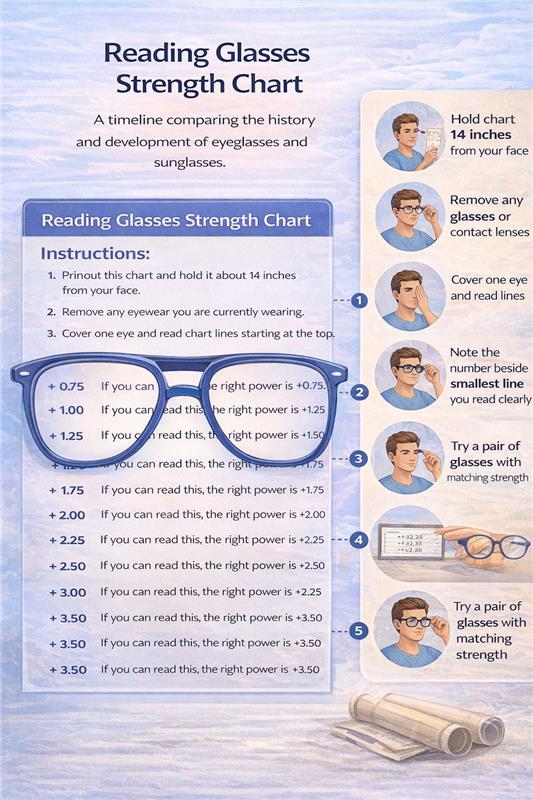
Using a Reading Glasses Strength Chart
Follow these steps to use a reading glasses strength chart correctly:
- Print the chart and hold it about 14 inches from your face
- Remove any glasses or contact lenses
- Cover one eye and read the chart from top to bottom
- Repeat with the other eye
- Note the diopter number next to the smallest line you can read clearly
- Try reading glasses with that same strength
- If two strengths feel similar, choose the lower power to reduce eye strain.
If two strengths feel similar, choose the lower power to reduce eye strain.
What Strength Reading Glasses Do I Need by Age?
While age-based guidelines are helpful, comfort is key. If lenses are too strong, they may cause headaches or eye fatigue.
When Over-the-Counter Readers Aren’t Enough
Over-the-counter reader glasses work well for many people, but they are not suitable for everyone. You may need prescription glasses or progressive lenses if you:
- Already wear prescription glasses
- Have different prescriptions in each eye
- Experience blurry distance vision along with near vision issues
Prescription reading glasses account for your full vision profile, which OTC readers cannot do.
Frequently Asked Questions About Reading Glasses
What level readers do I need?
Most people start with +1.00 to +1.50 readers in their 40s, increasing gradually over time. A reading chart or eye exam provides the most accurate result.
What size reading glasses do I need?
Reading glasses size depends on frame width, lens height, and bridge fit. Comfort and proper alignment are as important as lens strength.
Can reading glasses make your eyes worse?
No. Reading glasses do not weaken your eyes. They simply help compensate for presbyopia, which progresses naturally with age.
Are readers glasses the same as prescription reading glasses?
No. Readers glasses are one-size-fits-all magnification, while prescription reading glasses are customized to your eyes.
When to See an Eye Doctor
If your vision changes suddenly, if readers no longer help, or if you experience frequent headaches, schedule a comprehensive eye exam.