Choose from our wide range of
frames and lenses




Back to the articles
How to Get Rid of a Swollen Eye: Causes, Remedies & When to See a Doctor
Eye Wellness

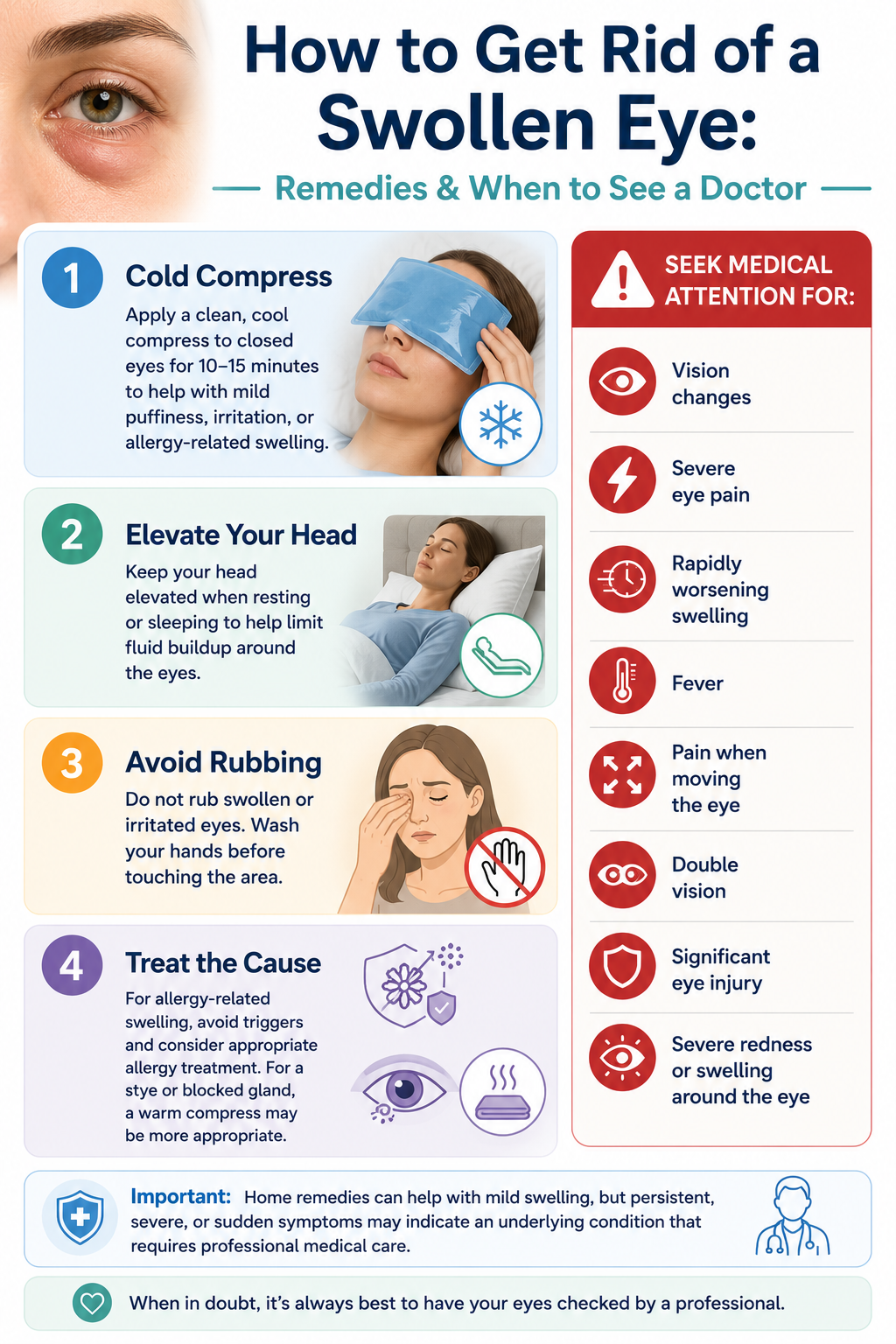
To reduce eye swelling, use a cold compress for 10–15 minutes, keep your head elevated, avoid rubbing your eye, and consider an antihistamine for allergies. Severe, painful swelling or vision changes need medical attention.
A swollen eyelid can be uncomfortable, itchy, tender, or simply make your eyes look puffy. In many cases, mild swelling improves on its own. But the best treatment depends on what caused it.
Understanding the cause can help you choose the right swollen eye remedies and know when it is time to see an eye care professional.
This article was reviewed by the Glasses.com editorial team against verified sources including the American Academy of Ophthalmology (AAO), the American Optometric Association (AOA), and peer-reviewed clinical literature.
What causes swollen eyes?
Swollen eyes are usually a symptom rather than a condition by themselves. Swelling can affect one or both eyelids and may develop because of irritation, allergies, inflammation, infection, injury, or another health problem.
Common causes include:
- Allergies: Pollen, dust, pet dander, cosmetics, and other allergens can cause itchy, watery, puffy eyes.
- Stye: A painful, red lump can develop when an eyelid gland becomes blocked and infected.
- Chalazion: A blocked oil gland can cause a firm lump or swelling in the eyelid.
- Conjunctivitis: Also known as pink eye, this can cause redness, discharge, irritation, and eyelid swelling.
- Injury: A blow or other trauma around the eye can cause swelling and bruising.
- Irritation: Smoke, makeup, contact lenses, or other irritants can make the eyelids inflamed.
- Other medical conditions: Certain skin, thyroid, or inflammatory conditions can also cause swelling around the eyes.
The cause is especially important when only one eye is swollen, when swelling is painful, or when other symptoms appear.
You may also like
How to reduce eye swelling fast
If the swelling is mild and there are no warning signs, simple steps may help reduce discomfort.
1. Apply a cold compress
For general puffiness or swelling caused by irritation or allergies, place a clean, cool compress over the closed eye for about 10–15 minutes.
Do not put ice directly on your skin. Wrap a cold pack or ice in a clean cloth first.
2. Keep your head elevated
Keeping your head raised can help limit fluid buildup around the eyes. When resting or sleeping, use an extra pillow if it is comfortable for you.
3. Do not rub your eyes
Rubbing can make irritation and swelling worse. It can also transfer allergens, dirt, and germs to the eye.
Wash your hands before touching the area around your eyes.
4. Remove eye makeup
If your eyes are swollen or irritated, avoid eye makeup until they feel better. Remove makeup gently and replace old eye cosmetics as recommended by the manufacturer.
5. Consider allergy treatment
If allergies are clearly causing itchy, watery, swollen eyes, avoiding the trigger can help. Over-the-counter allergy treatments, including appropriate antihistamines or antihistamine eye drops, may also provide relief.
If you are unsure which treatment is suitable for you, ask a doctor or pharmacist.
Remedy
May be useful for
How to use it
Cold compress
General puffiness, irritation, allergies
Apply to closed eyes for 10–15 minutes
Warm compress
Styes and blocked eyelid glands
Apply a comfortably warm, clean compress
Clean eyelid care
Crust or discharge around the eyelids
Gently clean without rubbing
Allergy treatment
Allergy-related itching and swelling
Avoid triggers and use appropriate allergy treatment
Swollen eye remedies: warm or cold compress?
The type of compress you use can depend on the likely cause.
A cold compress is generally a good first option for temporary puffiness and allergy-related swelling. A warm compress is often recommended for a stye or blocked oil gland because warmth can help loosen blocked material.
Avoid squeezing or popping a stye or lump on your eyelid.
How to get rid of puffy eyes
Puffy eyes are often temporary and can have simple causes such as lack of sleep, crying, allergies, or fluid retention.
To reduce temporary puffiness:
- Apply a cool, clean compress.
- Keep your head elevated when resting.
- Avoid rubbing your eyes.
- Drink enough fluids.
- Get adequate sleep.
- Reduce exposure to known allergens.
- Take a break from eye makeup if the area is irritated.
These steps may improve mild puffiness, but they will not treat an underlying infection or medical condition.
How long does a swollen eye last?
How long swelling lasts depends on the cause.
Mild puffiness caused by crying, tiredness, or temporary irritation may improve within hours. Allergy-related swelling may continue while you are exposed to the allergen. A stye or chalazion can last longer and may need treatment if it does not improve.
If swelling is getting worse, does not improve, keeps coming back, or is accompanied by other symptoms, contact a doctor or eye care professional.
When should you see a doctor for a swollen eye?
Some types of eye swelling require prompt medical attention.
Seek medical care if you experience:
- Changes in vision or loss of vision
- Significant eye pain
- Severe or rapidly increasing swelling
- Pain when moving the eye
- Fever along with swelling around the eye
- Significant redness around the eye
- A serious injury to the eye or surrounding area
- Double vision or difficulty moving the eye
- Swelling that does not improve or keeps returning
Swelling around the eye can occasionally be linked to a more serious infection. If you have severe symptoms, do not rely on home remedies alone.
How can you prevent swollen eyes?
You cannot prevent every cause of eye swelling, but good eye hygiene can lower the risk of irritation and some infections.
Follow these simple habits:
- Wash your hands before touching your eyes.
- Avoid rubbing your eyes.
- Remove eye makeup before going to bed.
- Do not share eye makeup or towels.
- Keep contact lenses clean and follow their replacement schedule.
- Replace eye cosmetics when they are old or contaminated.
- Avoid known allergens when possible.
If you also experience frequent eye redness, see our guide on how to get rid of red eyes.
For more information about reducing the appearance of eye redness and keeping your eyes looking healthy, read how to get whiter eyes.
Can you wear glasses with a swollen eye?
You can generally continue wearing glasses if they feel comfortable and do not make your symptoms worse. Glasses can also be useful if your eyes are irritated because they do not require touching the eye.
If you normally wear contact lenses and your eye is swollen, red, painful, or producing discharge, remove the lenses and contact an eye care professional for advice before wearing them again.
If you need prescription eyewear, explore eyeglasses.
Key Takeaway
- Mild eye swelling can often improve with a cool compress, head elevation, and avoiding eye rubbing.
- Allergies, styes, chalazia, irritation, conjunctivitis, and injuries are common causes of swollen eyes.
- A warm compress may be useful for a stye or blocked eyelid gland, while a cold compress can help with temporary puffiness and allergy-related swelling.
- Severe pain, vision changes, fever, rapidly worsening swelling, or pain with eye movement can require prompt medical care.
- Persistent or recurring swelling should be evaluated by a doctor or eye care professional.
Frequently Asked Questions
What is the fastest way to reduce eye swelling?
For mild swelling, a cool compress applied to the closed eye for 10–15 minutes may help reduce puffiness and discomfort. Keeping your head elevated and avoiding rubbing your eye can also help. If swelling is severe, painful, or affects your vision, seek medical care rather than relying on home treatment.
What causes one eye to swell?
One swollen eye can result from a stye, chalazion, insect bite, injury, irritation, or a localized infection. Allergies can also affect one eye, especially if an irritant contacts it. Pain, fever, vision changes, or rapidly worsening swelling should be assessed by a medical professional.
When should swollen eyes be seen by a doctor?
See a doctor if swelling is severe, painful, rapidly worsening, persistent, or associated with vision changes, fever, double vision, or pain when moving the eye. Significant swelling following an eye injury also needs medical assessment.