Choose from our wide range of
frames and lenses














Back to the articles
How to Get Whiter Eyes: Causes, Treatments, and Natural Remedies
Guides & How to

To get whiter eyes, stay hydrated, get enough sleep (7-8 hours), reduce eye strain from screens, and limit alcohol and smoking. Eye drops can temporarily reduce redness. Yellow or persistently red whites may indicate a medical condition.
Keeping the whites of your eyes bright is often a sign of good eye health. Changes in color usually reflect lifestyle habits, dryness, irritation, or underlying health conditions.
This article was reviewed by the Glasses.com editorial team against verified sources including the American Academy of Ophthalmology (AAO), the American Optometric Association (AOA), and peer-reviewed clinical literature.
Why Are My Eyes Not White?
The white part of the eye (the sclera) can lose brightness for several reasons. Most are temporary and linked to daily habits, but some may require medical attention.
Common Causes of Non-White Eyes
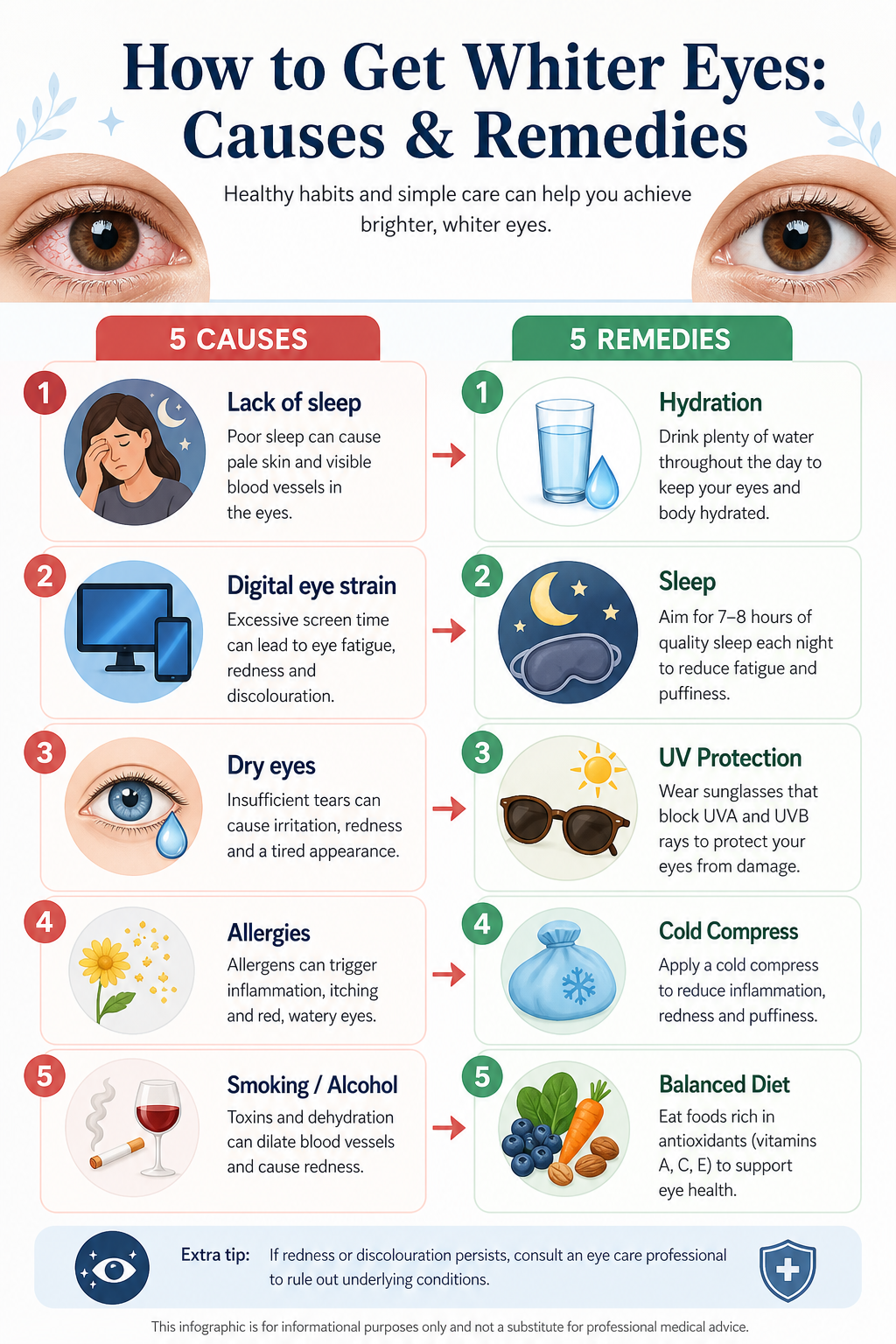
- Lack of sleep
- Digital eye strain
- Dry eyes or irritation
- Allergies or pollution exposure
- Alcohol or smoking
- Liver-related conditions, in yellowing cases
If discoloration persists, consult an eye care professional.
How to Get Whiter Eyes Naturally
There are several evidence-based ways to improve eye brightness without medical treatment.
Natural Ways to Whiten Eyes
- (1) Drink enough water daily
- (2) Sleep 7-8 hours consistently
- (3) Reduce screen time and follow the 20-20-20 rule
- (4) Wear UV-protective sunglasses outdoors
- (5) Avoid smoking and limit alcohol intake
- (6) Use cold compresses to reduce puffiness
These habits improve tear film stability and reduce irritation, which helps the sclera appear clearer.
Learn more about protection: UV protection in glasses .
You may also like
Eye Drops for Whiter Eyes: What Works Safely
Eye drops can temporarily reduce redness and improve comfort, but they do not treat underlying causes.
| Type of Eye Drop | Purpose | Effect on Eye Whitening | Safety Level |
|---|---|---|---|
| Artificial tears | Hydration | Mild brightness improvement | High |
| Saline drops | Irritation relief | Clears debris | High |
| Redness-reducing drops | Vasoconstriction | Quick whitening effect | Moderate (short-term use only) |
Overuse of redness-reducing drops may cause rebound redness. The American Academy of Ophthalmology (AAO) recommends using them sparingly.
Nutrition for Brighter, Healthier Eyes
Diet plays a key role in eye clarity and moisture balance.
Key Nutrients for Eye Brightness
- Vitamin A (carrots, spinach) - supports surface health
- Vitamin C (citrus, berries) - reduces oxidative stress
- Omega-3 fatty acids (fish, flaxseed) - improves tear production
- Hydration-rich foods (cucumber, watermelon) - supports moisture balance
Antioxidants help reduce inflammation that can make eyes appear dull or red.
Why Are the Whites of My Eyes Not White? (Medical Insight)
In some cases, discoloration is linked to internal health.
Medical Causes
- Redness: dilated blood vessels from irritation or infection
- Yellowing: possible bilirubin buildup related to liver function
- Chronic inflammation: can damage ocular tissue over time
Yellowing of the sclera should always be evaluated by a doctor.
Everyday Habits to Maintain Whiter Eyes
Consistency is key to long-term eye clarity.
Daily Eye Care Routine
- Follow the 20-20-20 rule during screen use
- Sleep at least 7-8 hours
- Wear UV-protective eyewear outdoors
- Use humidifiers in dry environments
- Apply cold compresses when eyes feel tired
These habits reduce strain and improve natural eye brightness.
Related protection guide: UV protection in glasses .
Myths About How to Make the Whites of Your Eyes Whiter
Some common beliefs are unsafe or ineffective.
Debunked Myths
- "Bleaching eye drops are safe" - false and dangerous
- "More redness drops = whiter eyes" - leads to rebound redness
- "Natural remedies are always safe" - not always medically proven
Evidence-based care is the safest approach for long-term eye health.
When to See a Doctor
Seek medical care if you notice:
- Persistent yellowing of the eyes
- Severe or long-lasting redness
- Eye pain or discharge
- Vision changes
These may indicate infection, inflammation, or systemic conditions requiring treatment.
KEY TAKEAWAY
- Whiter eyes usually reflect good sleep, hydration, and low eye strain.
- Eye drops can help temporarily but do not treat causes.
- Yellow eyes may signal a medical issue and require evaluation.
- Screen breaks and UV protection improve long-term eye clarity.
- Persistent discoloration should always be checked by a professional.
Frequently Asked Questions
Why are the whites of my eyes not white?
The whites of the eyes may appear red or dull due to dryness, lack of sleep, allergies, or irritation. In some cases, underlying health conditions can also affect scleral color.
What causes yellow eyes?
Yellow eyes are often caused by bilirubin buildup, which may be linked to liver function issues. This symptom should be evaluated by a healthcare professional promptly.
Are eye drops safe for making eyes look whiter?
Some eye drops are safe for short-term redness relief, such as artificial tears. However, overusing vasoconstrictor drops can cause rebound redness and should be avoided.