Choose from our wide range of
frames and lenses











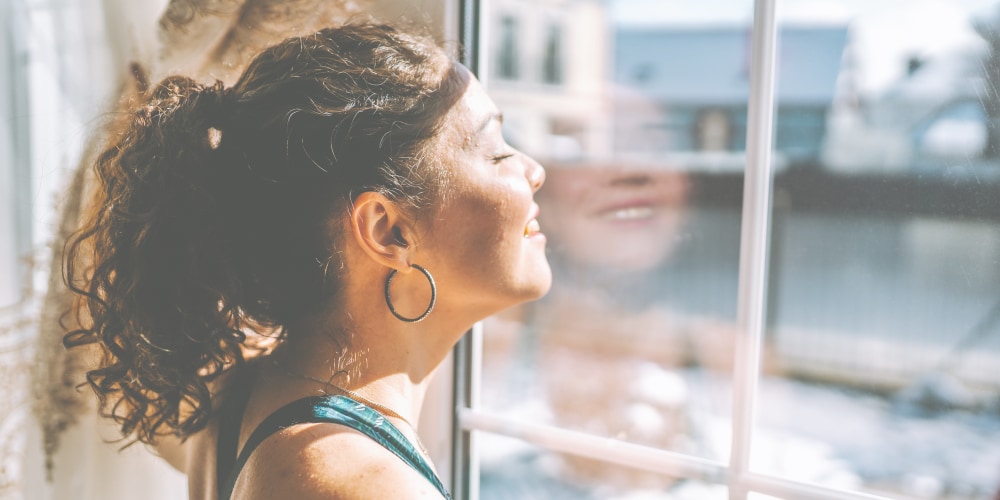
Sun gazing — looking directly at the sun — is medically dangerous and can cause permanent retinal damage, also known as solar retinopathy, even in seconds. It is not recommended by eye care professionals. Any perceived benefits do not outweigh the serious risks.
This article was reviewed by the Glasses.com editorial team against verified sources including the American Academy of Ophthalmology (AAO), the American Optometric Association (AOA), and peer-reviewed clinical literature.
What Is Sun Gazing?
Sun gazing, also called “solar healing,” is a meditation practice where people look directly at the sun, often during sunrise or sunset. Some believe it improves energy, mood, and sleep.
However, there is no scientific evidence that sun gazing provides unique health benefits beyond standard meditation or safe sunlight exposure.
Is Sun Gazing Safe?
No—sun gazing is not safe at any time of day.
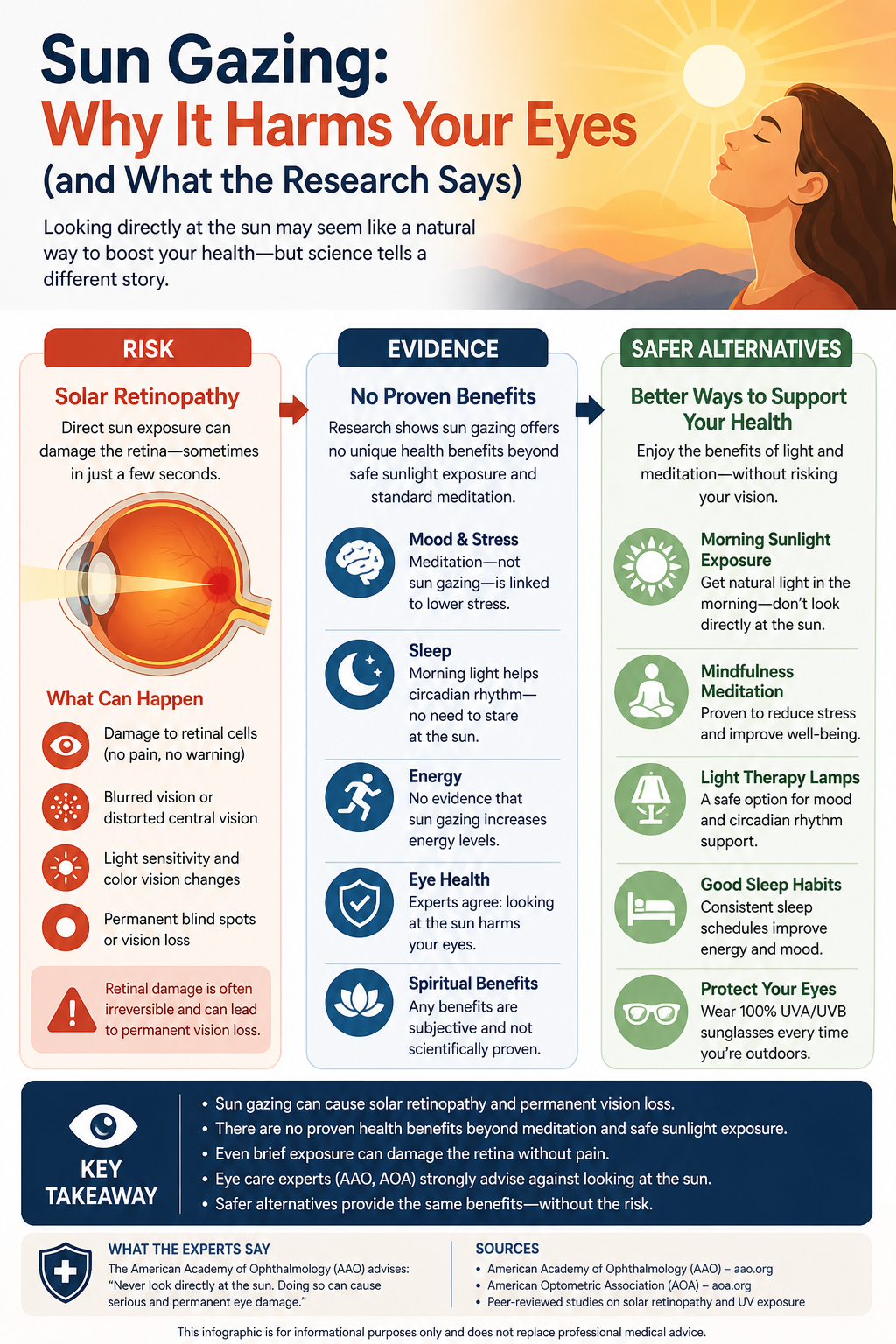
Even during sunrise or sunset, harmful ultraviolet (UV) and infrared radiation can reach your eyes. According to the AAO, direct sun exposure can damage the retina, the light-sensitive tissue at the back of the eye.
Why the Eyes Are Vulnerable
- The retina has no pain receptors, so damage can occur without warning
- UV and visible light can burn retinal tissue
- Damage may be permanent and irreversible
Learn more about sun damage to eyes.
You may also like
Sun Gazing Benefits vs. Risks
Many claims about sun gazing benefits are anecdotal. Here’s how they compare to medical evidence:
| Claimed Benefit | Scientific Evidence | Safer Alternative |
|---|---|---|
| Boosts mood | No unique effect vs. meditation | Mindfulness meditation |
| Improves sleep | Sunlight helps circadian rhythm (indirect) | Morning outdoor light exposure |
| Increases energy | Not proven | Regular exercise + sleep |
| Enhances eye health | False | UV protection + eye care |
| Spiritual clarity | Subjective | Meditation practices |
Bottom line: Any benefits come from being outdoors or meditating, not from looking directly at the sun.
Can You Go Blind From Looking at the Sun?
Yes, you can go blind from looking at the sun.
Direct exposure can cause solar retinopathy, a condition where intense light damages retinal cells. In severe cases, this leads to permanent vision loss.
Symptoms of Solar Retinopathy
- Blurred or distorted vision
- Dark or blind spots
- Light sensitivity
- Reduced color perception
Symptoms may appear hours after exposure, making early damage easy to miss.
What Happens If You Look at the Sun Too Long?
Even a few seconds of direct sun exposure can harm your eyes. Longer exposure increases the risk of:
- Retinal burns
- Permanent blind spots
- Reduced visual acuity
Unlike a sunburn on your skin, retinal damage does not heal easily.
Is Sun Gazing Good for Eye Health?
No—sun gazing is harmful, not helpful, for eye health.
Eye care professionals consistently advise never to look directly at the sun, even with sunglasses or during low-light periods.
Instead, focus on proven protective habits:
- Wear UV-blocking sunglasses
- Avoid direct sunlight exposure to eyes
- Schedule regular eye exams
Learn more about UV protection in glasses or browse sunglasses.
Why People Think Sun Gazing Works
Some reported benefits may come from related factors, not the act itself:
1. Sunlight Exposure
Natural light helps regulate circadian rhythm and supports vitamin D production through skin exposure, not eyes.
2. Meditation Effects
Meditation can reduce stress, anxiety, and improve sleep—without any eye risk.
3. Placebo Effect
Belief in a practice can influence how people feel, even without measurable physical benefits.
Safer Alternatives to Sun Gazing
If you're looking for the same benefits, choose safer options:
- Practice mindfulness meditation indoors or outdoors
- Get morning sunlight exposure without looking at the sun
- Use light therapy lamps for mood support
- Maintain a consistent sleep schedule
- Protect your eyes with UV-blocking sunglasses
These methods provide similar benefits without risking vision damage.
How to Protect Your Eyes Outdoors
Follow these evidence-based tips:
- Wear sunglasses that block 100% UVA and UVB rays
- Use a wide-brim hat for added protection
- Avoid peak sun hours, from 10 a.m. to 4 p.m.
- Never look directly at the sun—even during eclipses
Key Takeaway
- Sun gazing can cause solar retinopathy and permanent vision loss
- There are no proven health benefits beyond general meditation
- Even brief exposure can damage the retina without pain
- Eye experts, including the AAO and AOA, strongly advise against looking at the sun
- Safer alternatives provide the same benefits without risk
Frequently Asked Questions
Is sun gazing actually dangerous for your eyes?
Yes. Medical organizations like the AAO confirm that looking directly at the sun can cause solar retinopathy, leading to permanent retinal damage and vision loss.
What happens if you look at the sun too long?
Prolonged exposure can burn the retina, causing blind spots, blurred vision, and permanent damage. Symptoms may not appear immediately.
Can solar retinopathy be treated?
There is no guaranteed treatment. Some mild cases improve over time, but severe retinal damage is often permanent. Prevention is essential.