Choose from our wide range of
frames and lenses









Back to the articles
Can You Buy Eyeglasses with FSA or HSA? (2026 Guide to Eligible Vision Expenses)
Guides & How To
Yes, you can use both FSA and HSA funds to pay for prescription eyeglasses, contact lenses, and eye exams. These accounts cover vision-related medical expenses that correct eyesight, helping you save money with pre-tax dollars.
FSA vs HSA for Eyeglasses — Quick Comparison
| Feature | FSA (Flexible Spending Account) | HSA (Health Savings Account) |
|---|---|---|
| Ownership | Employer-owned | Employee-owned |
| Fund rollover | Limited / expires | Rolls over yearly |
| Eligibility | Employer plan required | High-deductible plan required |
| Contributions | Employee only | Employee + employer |
| Use for glasses | ✔ Yes | ✔ Yes |
What Vision Expenses Are Covered by FSA and HSA?
Most vision correction products qualify. If it improves eyesight, it’s usually eligible.
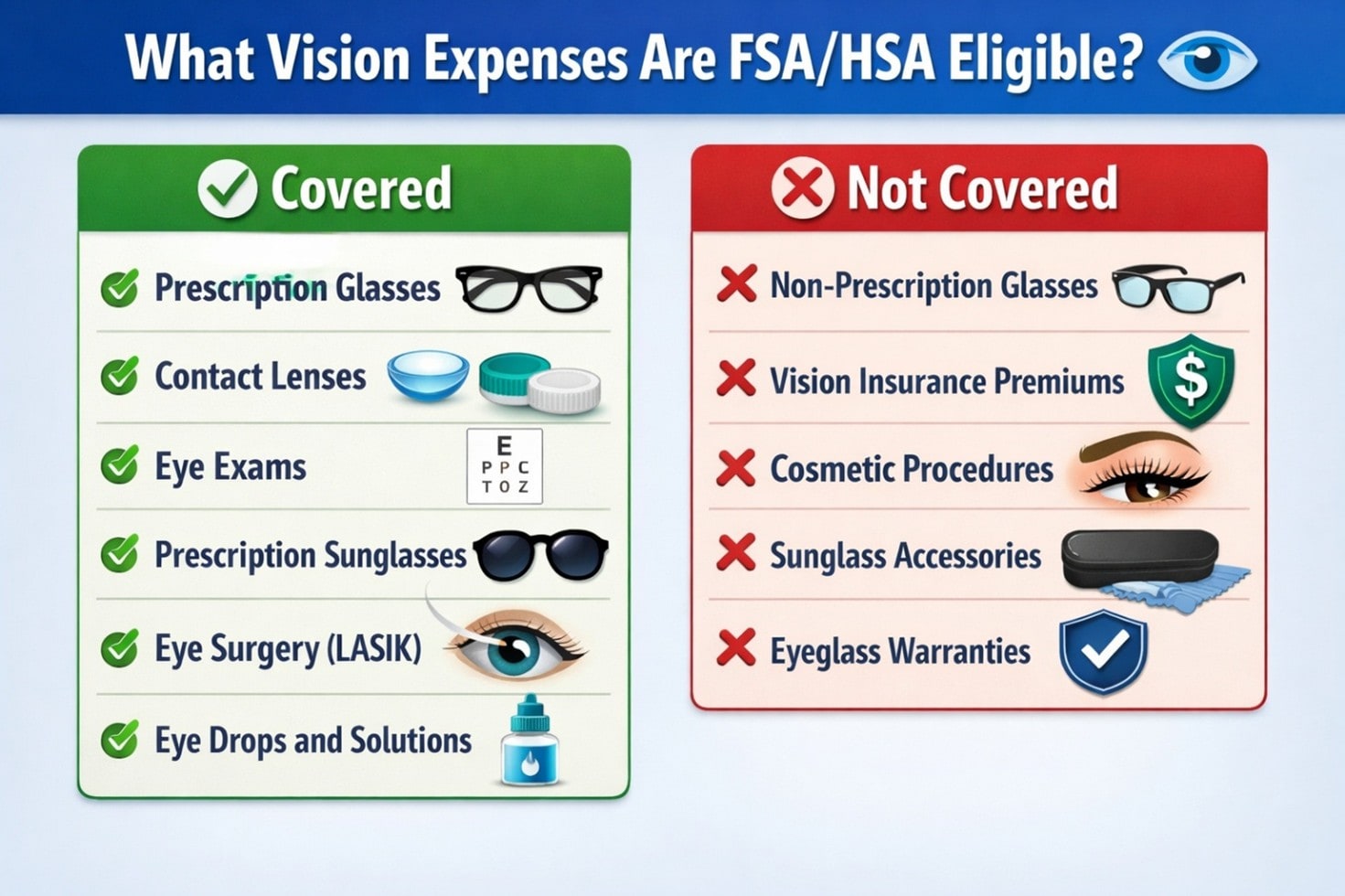
✔ Covered Expenses
- Prescription eyeglasses
- Prescription sunglasses
- Contact lenses (and solution)
- Eye exams and vision tests
- Reading glasses (including OTC)
- Eyeglass repair kits and cleaning supplies
- LASIK and other corrective surgeries
What Is NOT Covered?
Not all eyewear qualifies. The key rule: if it doesn’t correct vision, it’s usually not eligible.
✖ Not Covered
- Non-prescription glasses
- Regular sunglasses (no prescription)
- Cosmetic or colored contacts
- Insurance premiums
- Fashion eyewear
💡 Exception: Some plans may cover blue-light filtering glasses — always verify with your provider.
How Do FSA and HSA Accounts Work?
Flexible Spending Account (FSA)
- Funded through payroll deductions
- Typically “use-it-or-lose-it”
- Must be tied to employer plan
- May include limited rollover or grace period
👉 Best for: predictable annual expenses (eye exams, glasses)
Health Savings Account (HSA)
- Funds roll over indefinitely
- Owned by you (portable across jobs)
- Requires high-deductible health plan (HDHP)
- Can be used as long-term medical savings
👉 Best for: long-term healthcare planning
Other Account Types (Quick Note)
- HRA: employer-funded reimbursement only
- Limited FSA: covers vision + dental only
You may also like
How to Use Your FSA or HSA for Glasses
🛒 You can purchase eyewear:
- Online retailers
- Optical stores
- Eye doctor offices
Payment Options
- Use FSA/HSA debit card at checkout
- Submit receipt for reimbursement if needed
⚠ Important: Some retailers may not accept FSA/HSA cards — reimbursement is still possible.
When Should You Use Your Benefits?
🕒 Timing Strategy
- Use FSA funds before year-end (to avoid losing them)
- Use HSA anytime (no expiration)
- Plan ahead for major expenses like LASIK
Expert Insight
According to guidance aligned with IRS Publication 502 and vision care standards from the American Optometric Association, eligible expenses must primarily treat or correct a medical condition — including refractive errors like myopia or hyperopia.
Practical Tips to Maximize Your FSA/HSA for Vision Care
✔ Plan yearly vision expenses in advance
✔ Use FSA funds before expiration deadlines
✔ Keep receipts for reimbursements
✔ Check eligibility lists before purchasing
✔ Combine HSA savings with long-term care planning
FAQ — People Also Ask
Can I buy glasses online with FSA or HSA?
Yes. Most online eyewear retailers accept FSA/HSA cards or allow reimbursement with receipts.
Are reading glasses covered without a prescription?
Yes. Over-the-counter reading glasses are eligible because they correct vision.
Can I use FSA or HSA for LASIK?
Yes. LASIK and other corrective surgeries are typically eligible expenses.
Conclusion
FSA and HSA accounts are powerful tools to reduce the cost of vision care. Whether you need glasses, contacts, or eye exams, using pre-tax funds can significantly lower your out-of-pocket expenses. Understanding eligibility rules helps you maximize every dollar.