Choose from our wide range of
frames and lenses


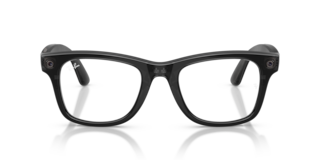
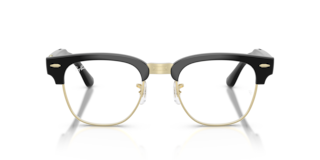
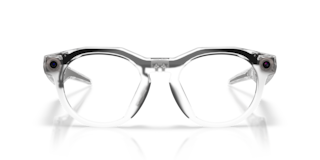










Glasses for astigmatism use cylindrical lenses that correct the uneven curvature of the cornea or lens. Standard single-vision or progressive lenses can correct astigmatism — special "toric" frames are not required, but prescriptions must include CYL and axis values.
This article was reviewed by the Glasses.com editorial team against verified sources including the American Academy of Ophthalmology (AAO), the American Optometric Association (AOA), and peer-reviewed clinical literature.
What Is Astigmatism?
Astigmatism is a common refractive error where the cornea or lens has an irregular shape. Instead of being perfectly round like a basketball, it is shaped more like a football.
This uneven curvature prevents light from focusing properly on the retina, causing:
- Blurry or distorted vision at all distances
- Eye strain or headaches
- Difficulty seeing clearly at night
- Squinting to improve focus
Astigmatism often occurs alongside nearsightedness, also known as myopia, or farsightedness, also known as hyperopia.
Can Glasses Fix Astigmatism?
Yes—glasses can correct astigmatism effectively.
Eyeglasses for astigmatism use cylindrical lenses to refocus light onto the retina. This improves clarity and reduces distortion.
How Astigmatism Glasses Work
Your prescription includes:
- Sphere (SPH): Nearsightedness or farsightedness
- Cylinder (CYL): Amount of astigmatism
- Axis: Direction of the astigmatism
These values guide how lenses are shaped to correct your vision.
Learn how to read your glasses prescription.
Do You Need Special Glasses for Astigmatism?
No, you don’t need special frames—but you do need the right lenses.
Any frame can hold astigmatism lenses. What matters is the prescription accuracy, not the frame type.
However, certain lens designs may improve comfort and clarity depending on your needs.
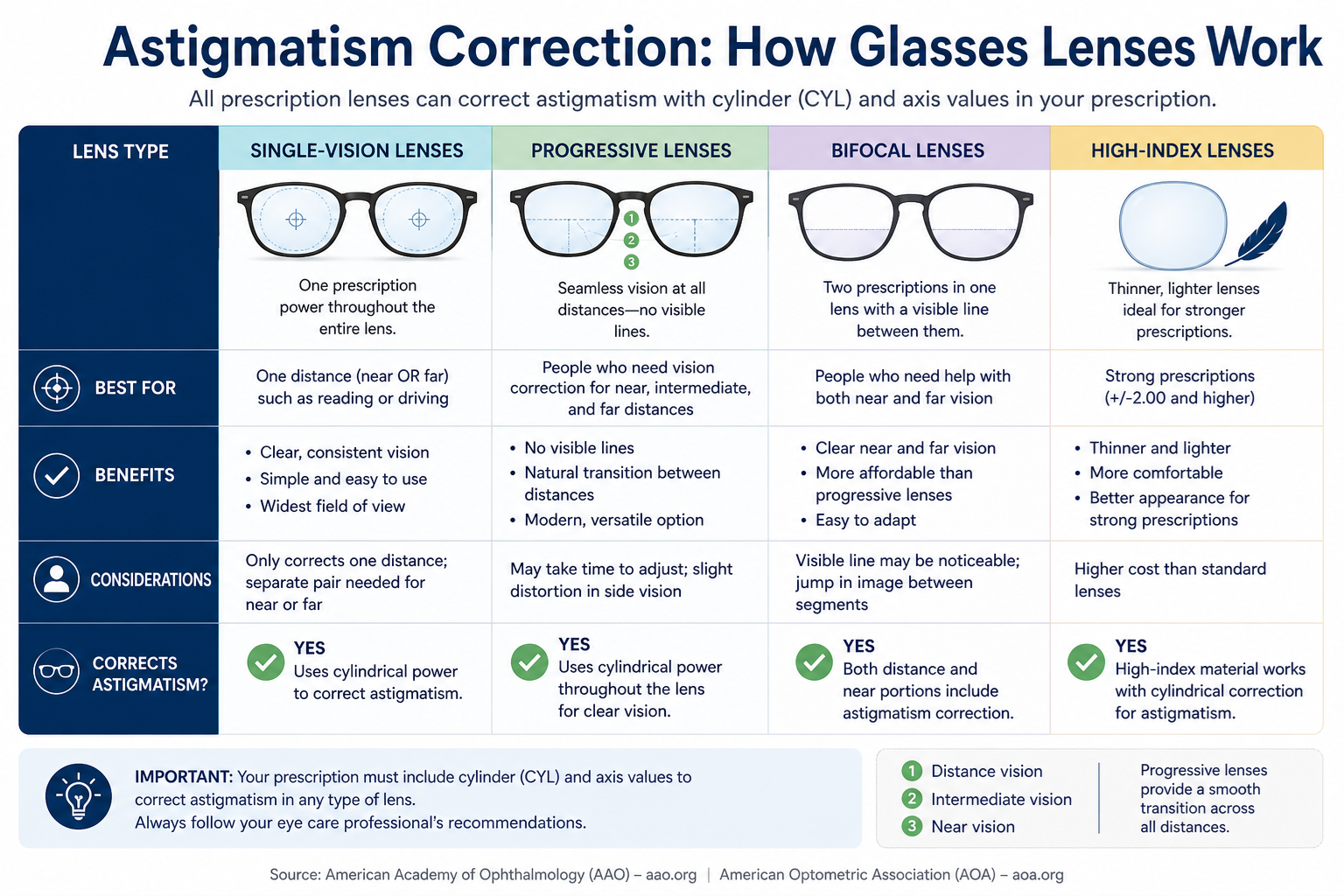
Best Glasses for Astigmatism: Lens Options Compared
Choosing the best glasses for astigmatism depends on your prescription and lifestyle.
| Lens Type | Best For | Benefits | Considerations |
|---|---|---|---|
| Single-vision | One distance, near or far | Simple, clear correction | Not for multiple distances |
| Progressive | Near + far vision | No visible lines | Adjustment period |
| Bifocal | Two distances | Easy switching | Visible lens line |
| High-index | Strong prescriptions | Thinner, lighter lenses | Higher cost |
| Polycarbonate | Active lifestyles | Impact-resistant, lightweight | Slightly less optical clarity |
Learn more about high-index lenses and polycarbonate lenses.
Shop Astigmatism Glasses
Compare and choose prescription eyeglasses optimized for astigmatism, including high-index and polycarbonate lens options.
Browse prescription eyeglasses.
You may also like
What Level of Astigmatism Requires Glasses?
Astigmatism is measured in diopters (D):
- Mild: ≤1.00 D
- Moderate: 1.00–2.00 D
- Severe: 2.00–4.00 D
- Extreme: >4.00 D
Most people need glasses when astigmatism reaches around 1.00–1.50 D or higher, especially if symptoms affect daily tasks like reading or driving.
Your eye doctor will confirm whether you need correction.
Are There Alternatives to Glasses for Astigmatism?
Yes, glasses are not the only option.
1. Contact Lenses
Toric contact lenses are designed specifically for astigmatism and provide stable vision.
Browse contact lenses for astigmatism.
2. Rigid Gas Permeable (RGP) Lenses
Rigid gas permeable lenses offer sharper vision, especially for higher astigmatism.
3. Refractive Surgery
Procedures like LASIK may reshape the cornea, but suitability varies.
Always consult your eye care provider before choosing an option.
How Long Does It Take Glasses to Correct Astigmatism?
Glasses correct vision immediately, but your brain may need time to adjust.
Most people adapt within:
- A few hours for mild prescriptions
- Up to 1–2 weeks for strong prescriptions
Common Adjustment Symptoms
- Slight distortion
- Depth perception changes
- Mild headaches
These usually improve as your eyes adapt.
Tips for Adjusting to New Astigmatism Glasses
Follow these steps to adapt faster:
- Wear your glasses consistently
- Avoid switching back to old prescriptions
- Ensure proper frame fit
- Keep lenses clean
- Give your eyes time to adjust
If symptoms persist beyond two weeks, contact your eye doctor.
Can Over-the-Counter Glasses Fix Astigmatism?
No—over-the-counter reading glasses cannot correct astigmatism.
They do not include cylinder or axis correction, which is essential for proper vision.
Only prescription eyeglasses for astigmatism can provide accurate correction.
Astigmatism and Night Vision
Astigmatism often becomes more noticeable at night.
Why Night Vision Is Affected
- Light scatters more easily
- Glare and halos increase
- Reduced contrast sensitivity
Properly prescribed glasses can significantly improve night driving and low-light vision.
Key Takeaway
- Glasses for astigmatism use cylindrical lenses to correct blurred vision
- You don’t need special frames—only an accurate prescription with CYL and axis values
- Most people benefit from glasses at 1.00–1.50 diopters or higher
- Over-the-counter glasses do not correct astigmatism
- Alternatives include toric contact lenses and refractive surgery
Frequently Asked Questions
Can regular glasses correct astigmatism?
Yes, as long as they include a prescription with cylinder (CYL) and axis values. Standard frames work—correction comes from the lenses, not the frame.
What is the difference between toric and standard lenses for astigmatism?
Toric lenses are used in contact lenses to stay stable on the eye. Glasses use cylindrical lenses instead, which do not require special stabilization.
How do I know if I need glasses for astigmatism?
If you have blurred or distorted vision, eye strain, or headaches, an eye exam can confirm astigmatism. Your doctor will prescribe glasses if needed.