Choose from our wide range of
frames and lenses









Author: Sam Calderon
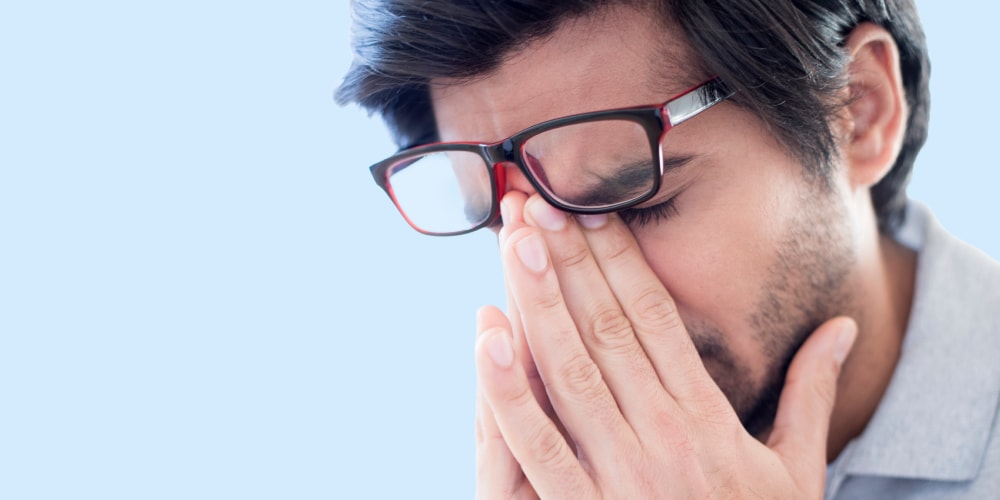
Are you one of the 166 million people in the U.S. who wear eyeglasses? You may have wondered if your prescription lenses are making your eyesight worse.
The truth is that wearing glasses does not harm your vision. Wearing glasses can improve eyesight by correcting refractive errors and preventing problems like eye strain and eye fatigue. However, your prescription can change due to other factors.
In this guide, we'll explore why people associate glasses with worsening vision. Regular eye exams help ensure your prescription is up-to-date and your eyes remain healthy for life.
Why Do I Need Eyeglasses?
A refractive error usually occurs when the shape of the eye, cornea or lens prevents light from focusing properly on the retina. This can cause blurry vision, double vision, and/or reduced vision in one or both eyes. The most common refractive errors are nearsightedness (myopia), farsightedness (hyperopia), astigmatism, and presbyopia.
Glasses address refractive errors by bending light to focus directly onto the retina. Eye doctors prescribe glasses with prescription lenses after a comprehensive eye exam.
Do Glasses Weaken Your Eyes?
Some people may falsely assume that relying on prescription glasses means you no longer exercise your eye muscles. They may believe this causes your eyes to weaken over time and requires you to wear stronger lenses.
The truth is that wearing glasses does not weaken your eyes. In some cases, glasses even allow some eye muscles to relax, which reduces eye strain and fatigue. However, your prescription can continue to change due to other factors, such as normal eye changes or an age-related vision issue.
Is It Bad To Wear Glasses All the Time?
Some people worry that wearing glasses too much will cause dependency on them, potentially making their eyesight worse.
Some prescriptions require you to wear glasses all day, while others are for specific tasks such as reading or driving. Talk to your eye doctor to determine when and how often you should wear your glasses.
You may also like
Can Wearing the Wrong Prescription Make Your Eyes Worse?
Adults and children who wear the wrong prescription may experience headaches, eye strain, dizziness, and fatigue. These symptoms are usually temporary and should subside when you switch to glasses with the correct prescription.
It is important to take children for routine, comprehensive eye exams, especially during the school years. Children’s eyes are still developing, and their vision can change rapidly. The best way to ensure that your child is not wearing the wrong glasses prescription is to have their eyes examined.
What Causes Vision to Worsen?
Eyeglasses do not make your eyesight worse, but other factors can lead to a change in prescription.
Age
The lens inside your eye tends to lose elasticity as you age. This is known as presbyopia and typically begins after the age of 40. Presbyopes require bifocals or over-the-counter readers to see close-up objects like books and menus. Presbyopia is not preventable and occurs even if you've never worn eyeglasses before.
Genetics
Refractive errors tend to run in families. For example, if one of your parents is nearsighted, you're more likely to develop an eye condition like myopia yourself.
UV Exposure
Overexposure to UV light increases your risk of cataracts and age-related macular degeneration, which can affect your vision. People who spend time outdoors without protection may experience long-term eye damage. Make sure to wear prescription sunglasses that block 100 percent of UV rays whenever you're outside.
Health Conditions
Health conditions such as diabetes or high blood pressure can lead to vision loss if left untreated. For example, diabetic retinopathy is a common complication of diabetes. Working with a doctor or healthcare provider to manage your health conditions is the best way to protect your eyesight long-term.
Lifestyle Factors
Everyday habits and choices also have an impact on vision. For example, smoking increases your risk of eye diseases such as age-related macular degeneration, cataracts, glaucoma, and diabetic retinopathy. Excessive alcohol consumption also negatively impacts long-term eye health.
Regular Eye Exams Are Key
The American Optometric Association recommends adults get a regular eye exam every one to two years. You may need more frequent exams depending on your age, health history, and other factors. These visits help ensure your prescription is up-to-date. An eye doctor can also diagnose and treat underlying health conditions related to your eyesight.
Do not wait for your next checkup if you have a sudden vision change. Contact an eye care professional immediately.
Find the Right Eyewear for Your Needs
Finding the proper eyewear can be a challenge. If you need new glasses for vision correction, speak to an optician about the type of lens that best suits your lifestyle. For example, progressive lenses are great for people who need to see clearly at various distances. Reading glasses offer magnification for close-up tasks.
It's important to remember that eyeglasses are designed to improve your quality of life. They don't make your eyesight worse, but they can help you see the world better. Keep up with regular eye exams and follow the recommendations from your eye doctor.
For more information about vision and corrective eyewear, explore Glasses.com. We offer a variety of frames and lenses to help you see better. Take advantage of our online resources and find the perfect pair today.