Choose from our wide range of
frames and lenses












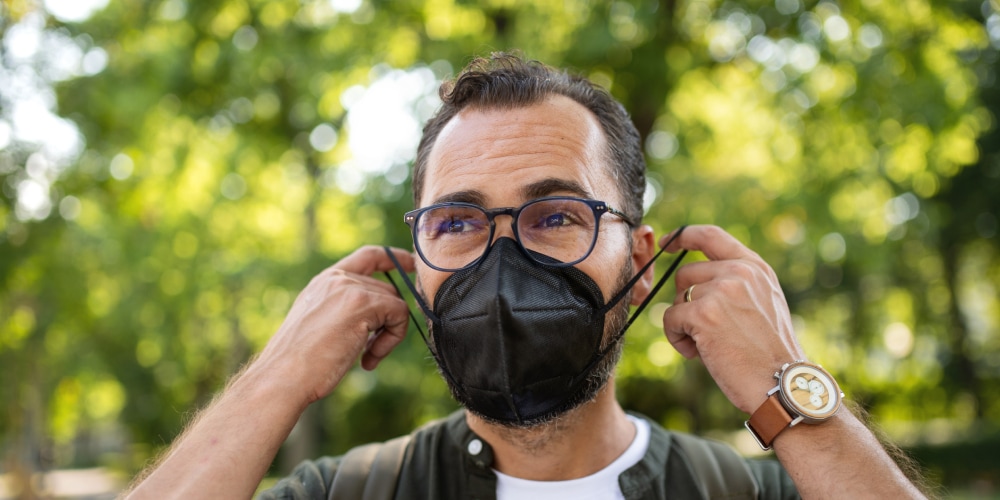
Glasses fog when warm breath escapes from the top of a mask and condenses on cooler lenses. The best fixes are improving the mask seal, adjusting how glasses sit on your nose, cleaning lenses with mild soap, or using anti-fog coatings designed to repel moisture.
Why Glasses Fog Up When You Wear a Mask
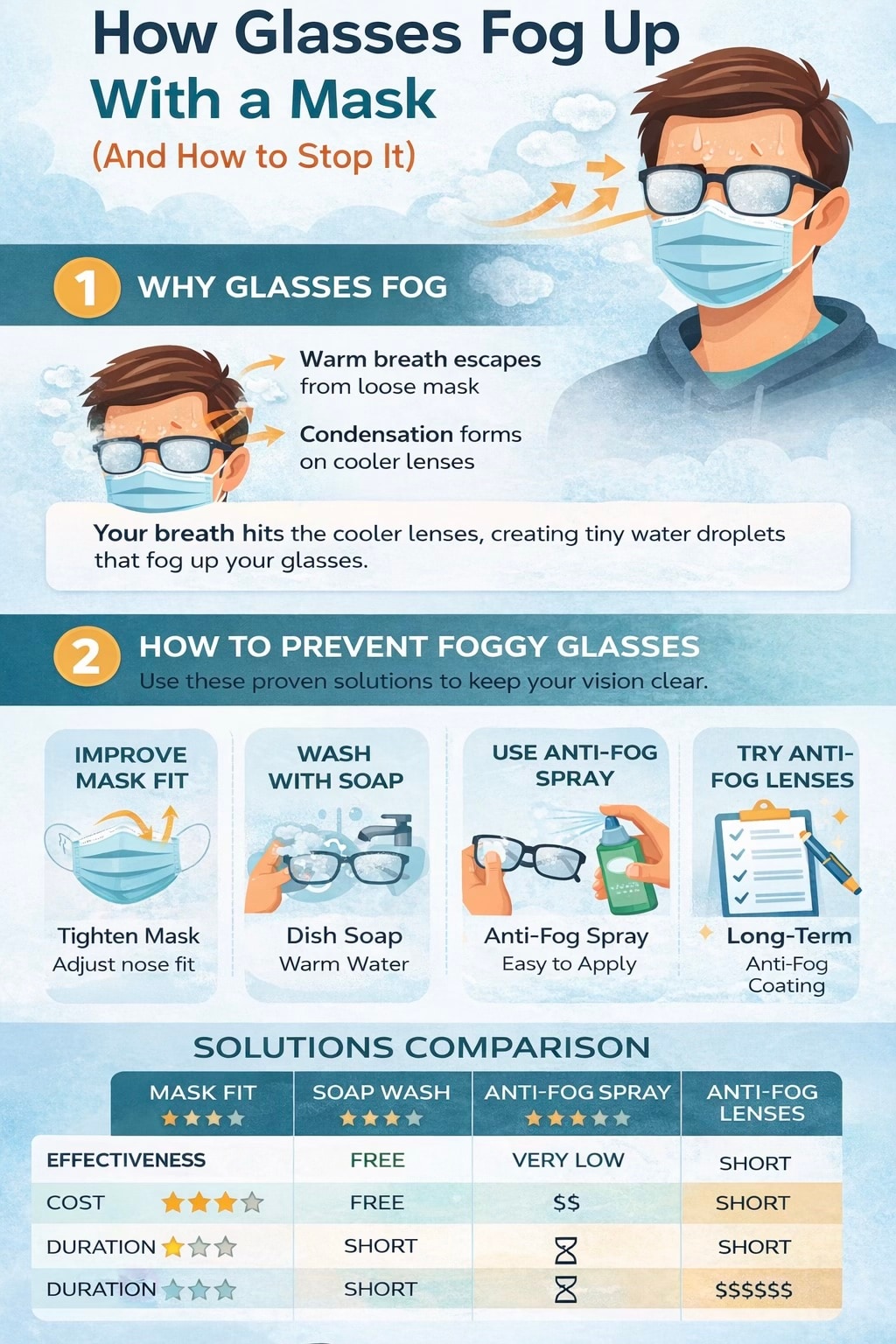
Glasses fog because of condensation. When warm air from your breath meets the cooler surface of your lenses, moisture forms tiny droplets that scatter light and create the cloudy effect. When wearing a mask, exhaled air often escapes through the gap near the nose bridge, rising directly toward the lenses.
Three factors make fogging more likely:
- Warm breath trapped inside a mask
- Cooler outdoor temperatures or air-conditioned rooms
- A loose mask seal around the nose
If glasses sit directly in the path of that warm air, fog will appear within seconds.
Where fog forms most often
| Situation | Why fog occurs |
|---|---|
| Wearing a loose mask | Warm breath escapes upward |
| Cold weather | Lens temperature is lower than breath |
| Physical activity | Increased breathing produces more moisture |
| Poorly fitted frames | Air flows directly under lenses |
Understanding this airflow makes it easier to stop fog before it starts.
8 Proven Ways to Prevent Glasses Fog When Wearing a Mask
Below are practical solutions recommended by opticians and commonly suggested in vision-care research.
1. Adjust the Position of Your Glasses
Moving glasses slightly lower on the nose can redirect airflow so lenses sit outside the steam path.
Additional tips:
- Adjust nose pads for a tighter fit
- Ask an optician to reshape the frame
- Use anti-slip ear grips to stabilize the frame
A better frame position often solves fogging immediately.
2. Improve the Mask Fit
A snug mask prevents warm air from escaping upward.
Steps to follow:
- Pinch the nose wire firmly
- Pull the mask higher on the bridge of the nose
- Rest glasses slightly on top of the mask edge
Many masks now include adjustable nose bridges, which significantly reduce fogging.
3. Wash Lenses With Mild Dish Soap
A simple cleaning trick can help prevent condensation.
Washing lenses with warm water and a drop of dish soap leaves a thin invisible film that reduces surface tension. This prevents water droplets from forming.
Steps:
- Rinse lenses with warm water
- Apply one drop of dish soap
- Gently rub both sides
- Rinse and dry with a microfiber cloth
This technique is commonly recommended by opticians for temporary fog prevention.
4. Seal the Mask With Skin-Safe Tape
Creating a better seal across the nose bridge can stop warm air leaks.
Method:
- Apply a strip of medical tape across the bridge of your nose
- Place the mask over the tape
- Press gently to seal the upper edge
Some people also use athletic tape or adhesive bandages for the same effect.
5. Redirect Your Breathing Downward
A simple breathing adjustment can reduce fog.
Technique:
- Place your upper lip slightly over your lower lip
- Exhale downward through the bottom of the mask
This directs airflow away from the lenses instead of upward.
6. Use Anti-Fog Sprays or Wipes
Anti-fog products are specifically designed for lenses.
They work by creating a hydrophilic coating that prevents water droplets from forming.
Common formats include:
- Anti-fog sprays
- Pre-moistened wipes
- Gel coatings
Always follow instructions and ensure lenses are fully dry before wearing them.
7. Choose Anti-Fog Lens Coatings
If fogging happens frequently, consider lenses with anti-fog technology.
Many modern lenses offer coatings such as:
- Anti-reflective coatings
- Scratch resistance
- Hydrophobic protection
- Anti-fog treatments
These coatings help lenses stay clear in humid environments.
8. Wear Contact Lenses Instead
In situations where masks are mandatory for long periods, contact lenses can eliminate the fogging issue entirely.
Many people choose contacts when:
- Exercising
- Working in healthcare settings
- Wearing protective masks for long hours
Consult an eye care professional before switching to contacts.
You may also like
Common “Fog Prevention Hacks” to Avoid
Some popular internet tricks can actually damage your lenses.
⚠ Toothpaste
Toothpaste may reduce fog temporarily but many formulas contain abrasive particles that can scratch lenses.
⚠ Saliva
Saliva spreads bacteria and does not effectively prevent condensation.
⚠ Hand Sanitizer
Alcohol can damage lens coatings and reduce optical clarity.
⚠ Vinegar
Although vinegar cleans glass surfaces, most eyeglass lenses are plastic and can be damaged by acidic solutions.
Quick Comparison: Which Anti-Fog Method Works Best?
| Method | Effectiveness | Cost | Best For |
|---|---|---|---|
| Adjust mask fit | High | Free | Everyday use |
| Dish soap wash | Medium | Very low | Temporary fix |
| Anti-fog spray | High | Low | Frequent fogging |
| Anti-fog lenses | Very high | Higher | Long-term solution |
| Contact lenses | Complete solution | Varies | Active lifestyles |
Practical Tips From Eye Care Professionals
If fogging continues, try combining several methods.
Best results usually come from:
- A well-fitted mask with a nose wire
- Glasses positioned slightly over the mask edge
- Regular lens cleaning with microfiber cloths
- Using anti-fog treatments when needed
Eye care professionals often recommend layering two solutions rather than relying on only one.
Recommended Internal Links
FAQ: Preventing Foggy Glasses
Why do my glasses fog up so quickly with a mask?
Warm breath escapes from the top of the mask and condenses on the cooler lens surface, forming tiny water droplets that scatter light.
Do anti-fog sprays really work?
Yes. Anti-fog sprays reduce surface tension on lenses so water spreads into a thin transparent layer rather than droplets.
Is washing glasses with soap safe?
Yes, if you use mild dish soap and warm water. Avoid abrasive cleaners or products that contain alcohol or ammonia.
Final Thoughts
Foggy glasses can be frustrating, especially when wearing a mask for long periods. Fortunately, simple adjustments—such as improving mask fit, cleaning lenses properly, or using anti-fog coatings—can keep your vision clear.
The key is controlling airflow and preventing condensation before it forms.
With the right approach, you can wear both a mask and glasses comfortably without constantly wiping your lenses.