Choose from our wide range of
frames and lenses






Back to the articles
UV Protection in Glasses: What It Is, Why It Matters, and How to Choose the Right Lenses
Glasses Type
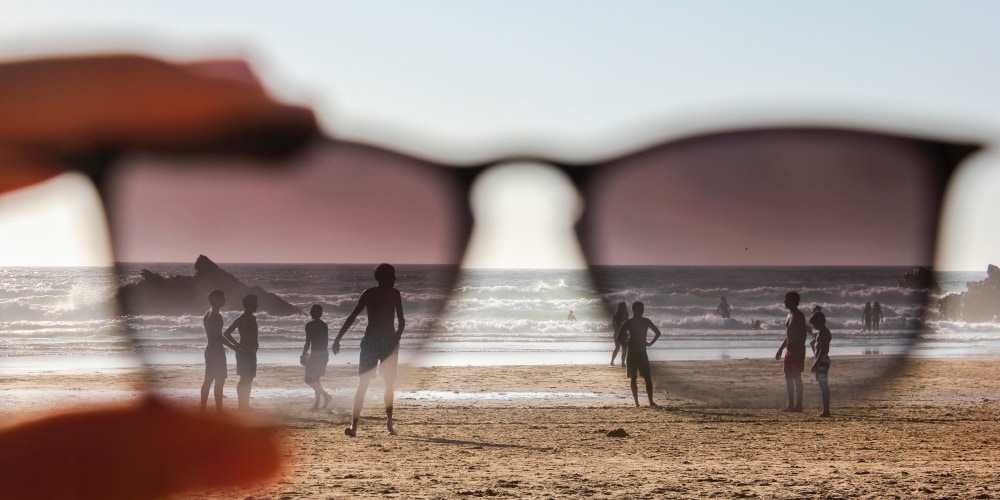
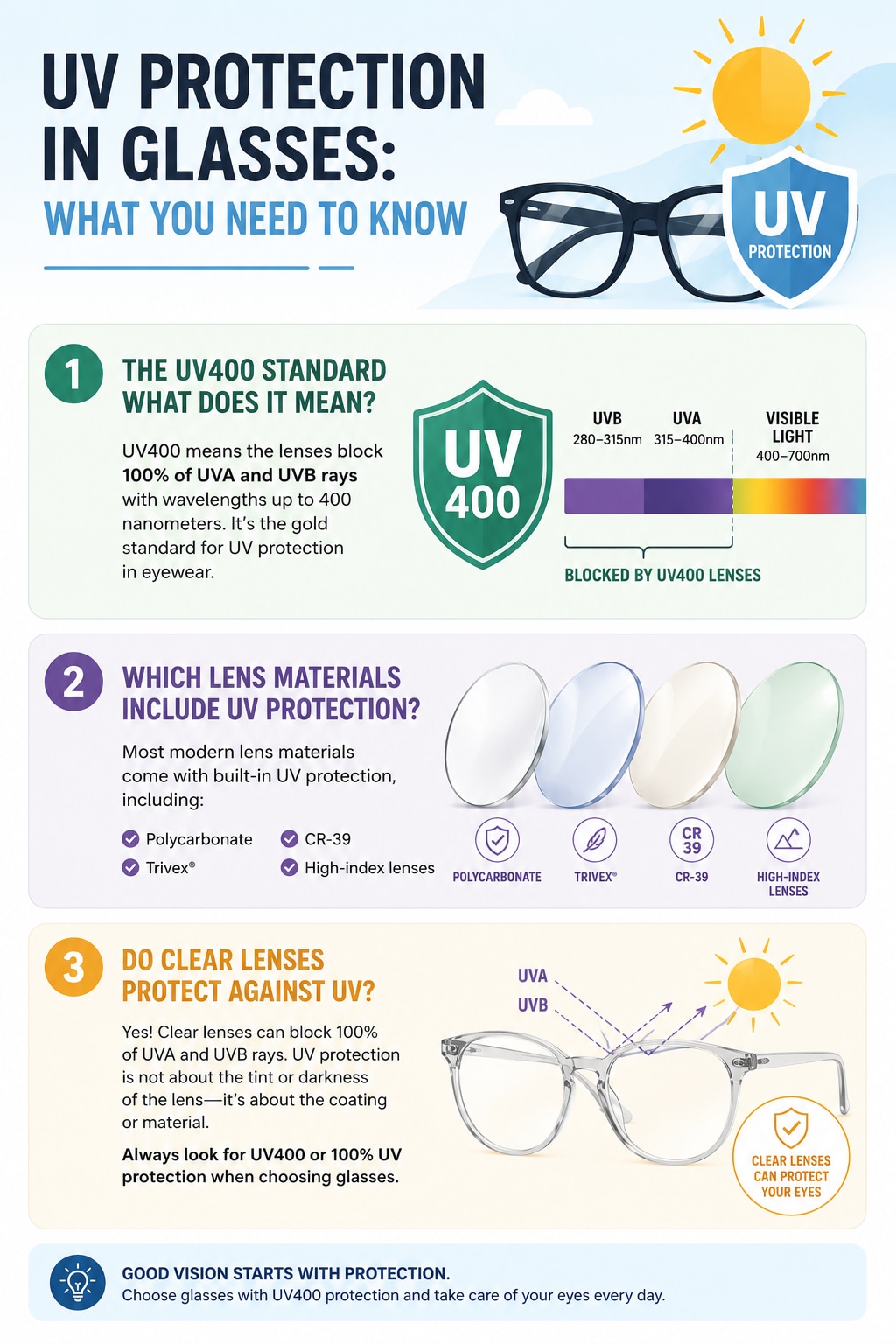
Most high-quality prescription lenses include built-in UV400 protection. Polycarbonate and high-index lenses naturally block 100% of UVA and UVB rays, and clear lenses with a UV coating protect your eyes even without a tint.
Protecting your skin from the sun is important, but your eyes need protection too. Ultraviolet (UV) rays can damage the surface of the eye and may increase the long-term risk of conditions such as cataracts. The good news is that many modern prescription lenses already include UV protection, and adding it to other lenses is often simple.
Whether you're buying everyday eyeglasses or sunglasses, understanding UV protection helps you make a smarter choice for your eye health.
This article was reviewed by the Glasses.com editorial team against verified sources including the American Academy of Ophthalmology (AAO), the American Optometric Association (AOA), and peer-reviewed clinical literature.
Do glasses have UV protection?
Yes—but not all glasses offer the same level of protection.
Many modern prescription lenses, especially polycarbonate and high-index lenses, naturally block 100% of UVA and UVB rays. Other clear lenses may require a UV coating to achieve the same protection.
When shopping for eyewear, check the product description or ask whether the lenses provide UV400 protection, which blocks ultraviolet light up to 400 nanometers.
For sunglasses, choose lenses labeled 100% UVA/UVB protection or UV400.
Learn more about lens materials: Polycarbonate lenses
You may also like
Why is UV protection in glasses important?
UV radiation reaches your eyes throughout the year—not just on bright summer days. Clouds block only part of UV light, and rays can reflect from water, sand, snow, pavement, and even buildings.
According to the American Academy of Ophthalmology (AAO), long-term UV exposure may contribute to:
- Cataracts
- Photokeratitis (sunburn of the eye)
- Growths on the eye, such as pterygium
- Damage that may increase the risk of some retinal diseases over time
Children and young adults are especially important to protect because a significant portion of lifetime UV exposure occurs before adulthood.
Wearing UV-protective eyewear whenever you're outdoors is one of the easiest ways to reduce unnecessary UV exposure.
Do all glasses block UV?
No: some lenses naturally block UV light, while others need an added UV treatment.
| Lens type | UV protection | Notes |
|---|---|---|
| Polycarbonate lenses | Yes | Naturally block 100% UVA and UVB rays |
| High-index lenses | Usually yes | Most premium high-index lenses include UV protection |
| Standard plastic lenses | Sometimes | May require a UV coating |
| Glass lenses | Varies | Check manufacturer specifications |
| Sunglasses with UV400 | Yes | Block nearly all UVA and UVB rays up to 400 nm |
Always confirm the UV rating rather than assuming every pair provides full protection.
Do clear glasses have UV protection?
Yes. Clear lenses can protect your eyes from UV rays even though they are not tinted.
Many prescription clear lenses include UV protection built into the material or through a special coating. This means your everyday glasses may help protect your eyes during daily activities such as driving, walking outside, or commuting.
However, clear lenses do not reduce bright sunlight or glare. If you're spending extended time outdoors, sunglasses remain the better choice because they combine UV protection with greater comfort in bright conditions.
Browse our collection of Sunglasses designed for everyday outdoor wear.
What does UV400 glasses meaning actually refer to?
UV400 is the highest commonly available standard for consumer eyewear.
A lens labeled UV400 blocks ultraviolet light with wavelengths up to 400 nanometers, including virtually all UVA and UVB radiation that reaches Earth's surface.
This is why eye care professionals generally recommend choosing sunglasses with either:
- UV400 protection
- 100% UVA and UVB protection
These terms are often used interchangeably because they provide the same practical level of UV protection.
UV protection vs. polarized lenses: What's the difference?
Many people confuse polarized lenses with UV protection, but they serve different purposes.
| Feature | UV Protection | Polarized Lenses |
|---|---|---|
| Blocks harmful UV rays | Yes | Not necessarily |
| Reduces glare | No | Yes |
| Helps protect long-term eye health | Yes | Only if combined with UV protection |
| Improves visual comfort around water and roads | Limited | Yes |
The best outdoor sunglasses provide both UV protection and polarization.
How to choose glasses with UV protection
When comparing eyewear, look for these features:
- Choose lenses labeled UV400 or 100% UVA/UVB protection.
- Consider polycarbonate or high-index lenses for built-in UV protection.
- If purchasing clear prescription lenses, confirm whether UV protection is included.
- For outdoor activities, wear sunglasses even if your everyday glasses block UV.
- Replace damaged or heavily scratched lenses if visibility is affected.
Remember that darker lenses do not automatically provide better UV protection. The UV-blocking treatment—not the tint—is what protects your eyes.
Frequently Asked Questions
Do clear glasses protect your eyes from UV?
Yes. Many clear prescription lenses include built-in UV protection or a UV coating. Clear lenses can block harmful UVA and UVB rays even without a tint, although sunglasses are still more comfortable in bright sunlight.
Is UV400 better than UV protection?
UV400 is a specific standard of UV protection. It blocks ultraviolet light up to 400 nanometers, covering virtually all UVA and UVB rays. When sunglasses are labeled UV400 or 100% UVA/UVB protection, they generally provide equivalent protection.
Do regular glasses block UV rays?
Some do, but not all. Polycarbonate and many high-index prescription lenses naturally block UV rays, while other lens materials may require a UV coating. Always verify the manufacturer's specifications.
Key Takeaways
- UV400 lenses block virtually all UVA and UVB rays up to 400 nanometers.
- Many polycarbonate and high-index prescription lenses naturally provide 100% UV protection.
- Clear prescription glasses can protect against UV even without tinted lenses.
- Polarized lenses reduce glare but should also include UV protection.
- For the best outdoor eye protection, choose sunglasses labeled UV400 or 100% UVA/UVB protection.
Sources
- American Academy of Ophthalmology (AAO): UV safety recommendations and eye health guidance.
- American Optometric Association (AOA): UV protection and sunglasses recommendations.
- World Health Organization (WHO): Ultraviolet radiation and eye health.
- Peer-reviewed ophthalmology literature on UV exposure, cataracts, and ocular surface disease.