Choose from our wide range of
frames and lenses













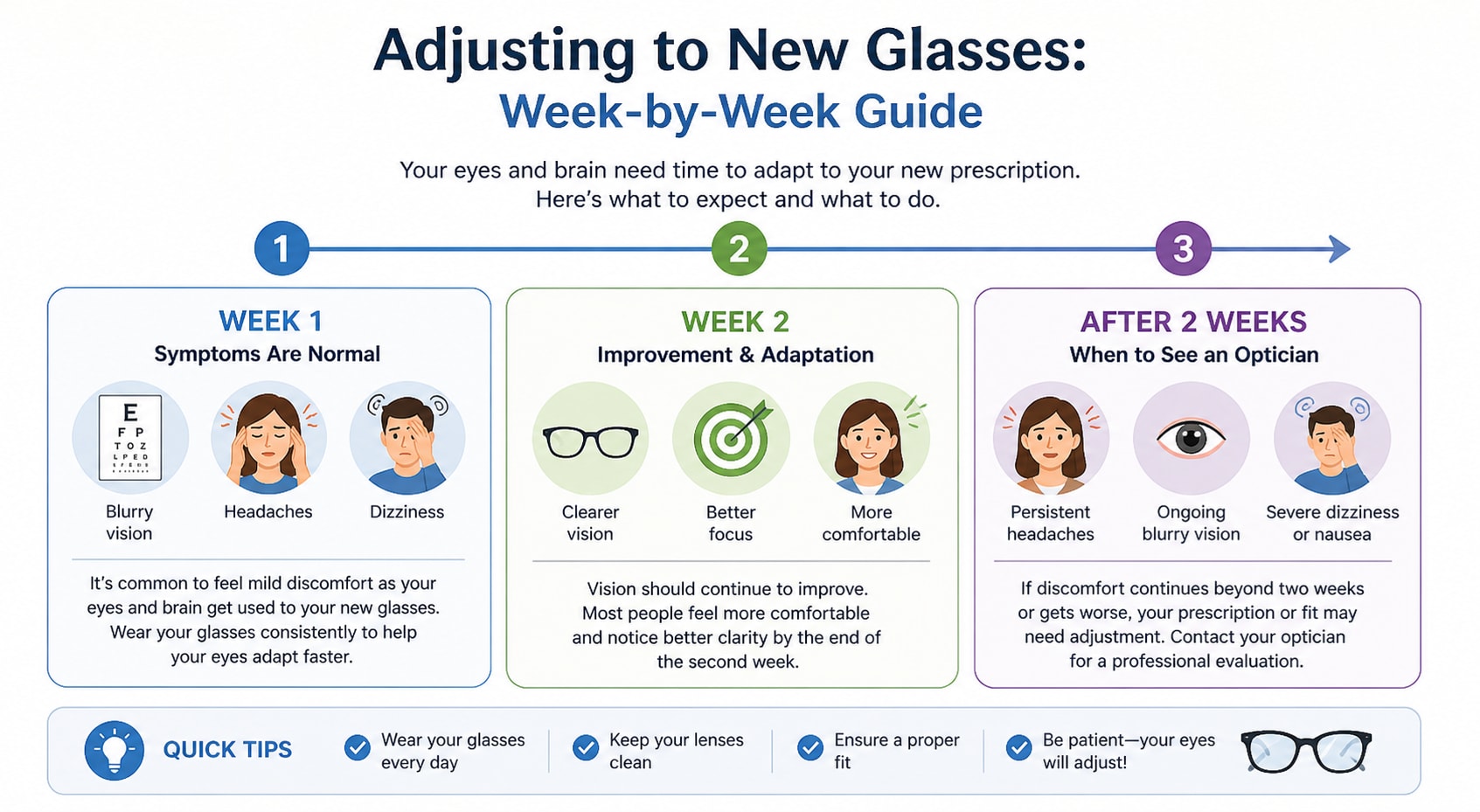
Most people adjust to new glasses within 1-2 weeks. Common symptoms — headaches, blurriness, or dizziness — are normal and typically resolve as your eyes and brain adapt to the new prescription.
Adjusting to new glasses is a short but important process. Even a small change in prescription can affect how your eyes focus and how your brain interprets visual information. The good news: most symptoms improve quickly with consistent wear.
This article was reviewed by the Glasses.com editorial team against verified sources including the American Academy of Ophthalmology (AAO), the American Optometric Association (AOA), and peer-reviewed clinical literature.
Why Do New Glasses Feel Strange at First?
Your eyes don’t work alone—your brain plays a big role in how you see. When you get new glasses, your brain must adapt to updated visual input.
Common Reasons for Adjustment Symptoms
- A stronger or weaker prescription
- Changes in lens type or shape
- New frame size or fit
- Switching to progressive lenses
According to the American Optometric Association (AOA), short-term discomfort is normal as your visual system recalibrates.
You may also like
Adjusting to New Glasses: What to Expect
Most people experience mild symptoms during the first few days.
Common Symptoms
- Blurry vision
- Headaches
- Eye strain
- Dizziness or slight nausea
- Distorted depth perception
These symptoms usually fade as your eyes adjust. If they persist beyond two weeks, it may indicate a fit or prescription issue.
| Timeframe | What You May Feel | What’s Normal? |
|---|---|---|
| Days 1–3 | Blurry vision, headaches, dizziness | Yes, very common |
| Days 4–7 | Improving clarity, less discomfort | Yes |
| Week 2 | Vision feels natural | Yes |
| After 2 weeks | Ongoing discomfort | Check with optician |
This timeline reflects typical adaptation patterns noted by vision care professionals and supported by clinical guidance from the American Academy of Ophthalmology (AAO).
New Glasses Headache: What Causes It?
Headaches are one of the most common complaints when adjusting to new glasses.
Causes of Headaches
- Prescription changes, especially astigmatism correction
- Eye muscle strain
- Incorrect pupillary distance, also known as PD
- Frame fit issues
Wearing your glasses consistently helps your eyes adapt faster and reduces strain over time.
Eyes Blurry with New Glasses: Is It Normal?
Yes—blurry vision is normal at first.
Your eyes are learning to focus through a new lens correction. This is especially noticeable if:
- Your prescription changed significantly
- You’re wearing glasses for the first time
- You switched lens types
If blurriness does not improve within 1-2 weeks, consult your optician.
New Glasses Dizziness: Should You Be Concerned?
Mild dizziness is common, especially in the first few days.
Why It Happens
- Your brain is adjusting to new depth perception
- Peripheral vision may feel distorted
- Lens curvature can affect spatial awareness
This is more common with progressive lenses or high-index lenses. Learn more about what are high-index lenses.
Adjusting to Progressive Lenses
Progressive lenses require a longer adjustment period.
What Makes Them Different
- Multiple prescription zones in one lens
- No visible lines between distances
- Requires learning where to look for clear vision
Tips for Faster Adjustment
- Move your head—not just your eyes
- Look through the correct part of the lens
- Wear them consistently throughout the day
- Avoid switching back to old glasses
Most users adapt within 1-2 weeks, though some may need slightly longer.
How to Adjust to New Glasses Faster
You can speed up the process with a few simple habits.
Practical Tips
- Wear your glasses all day from the start
- Keep them clean to reduce visual strain
- Take short breaks if needed
- Ensure proper fit and alignment
- Follow your eye care provider’s instructions
Avoid switching between old and new glasses—it slows adaptation.
When to See an Optician
Some symptoms should not be ignored.
Contact a Professional If You Have:
- Persistent headaches after 2 weeks
- Ongoing blurry vision
- Severe dizziness or nausea
- Eye pain
These may indicate a prescription error or fitting issue.
To better understand your prescription, read our guide to your glasses prescription.
Choosing Comfortable, High-Quality Glasses
The right frames and lenses can make adjustment easier.
- Lightweight frames reduce pressure
- Proper fit prevents slipping
- Quality lenses improve clarity
Browse eyeglasses to find comfortable frames and lenses.
Frequently Asked Questions
How long does it take to adjust to new glasses?
Most people adjust within 1-2 weeks. Mild symptoms like headaches or blurry vision are normal and usually improve within a few days, according to the American Optometric Association (AOA).
Why do my new glasses give me headaches?
Headaches are often caused by prescription changes or eye strain. Your eyes are working harder to adapt to the new lenses, but this typically resolves within a few days to a week.
Is dizziness normal with new glasses?
Yes, mild dizziness is common, especially in the first few days. It happens as your brain adjusts to new depth perception and visual input, particularly with progressive lenses.
Key Takeaway
- Most people adjust to new glasses within 1-2 weeks.
- Headaches, blurry vision, and dizziness are normal early symptoms, according to AAO and AOA guidance.
- Consistent wear helps your eyes adapt faster.
- Progressive lenses may take slightly longer to adjust to.
- Persistent symptoms beyond two weeks should be checked by an optician.