Choose from our wide range of
frames and lenses













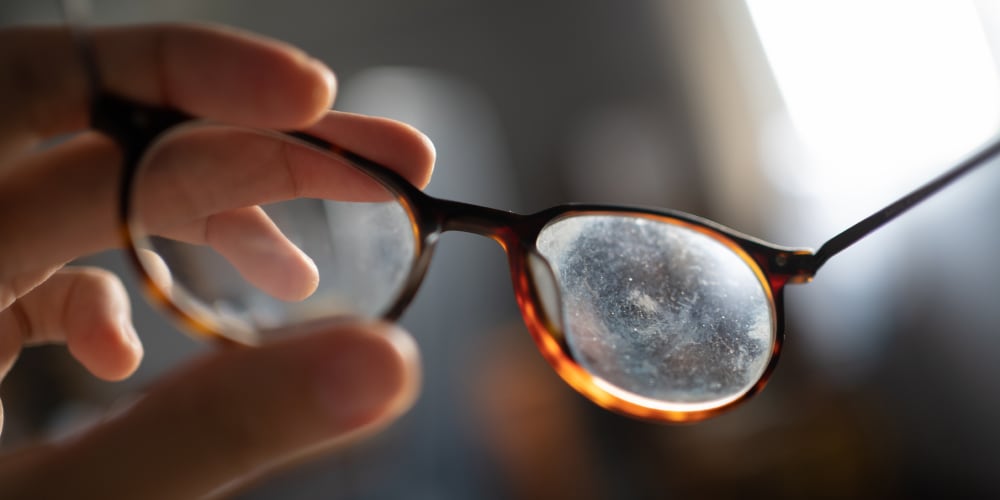
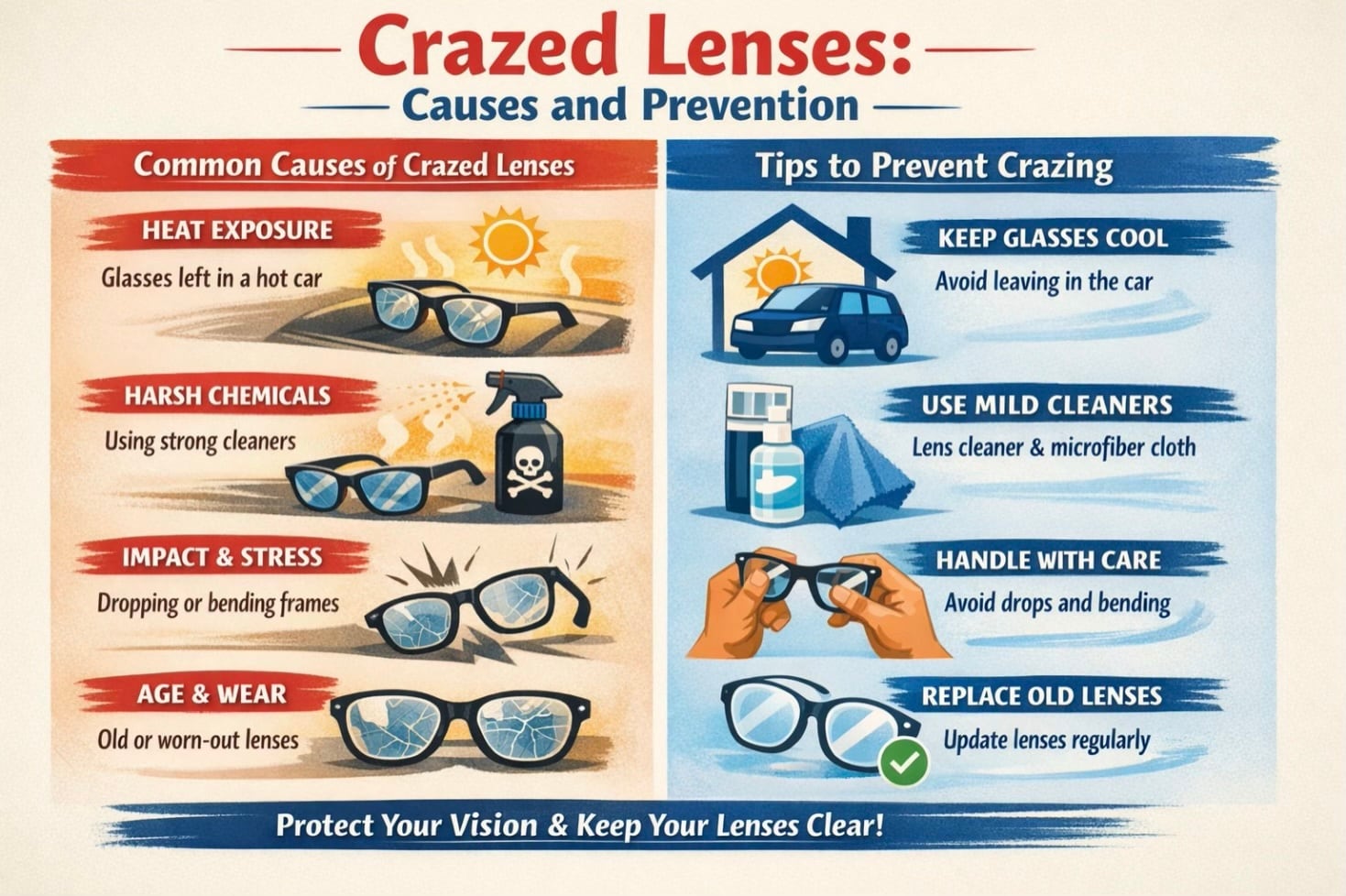
Lens crazing is a spider web-like pattern of fine cracks in the anti-reflective coating on eyeglass lenses, often caused by extreme heat, harsh cleaners, or manufacturing defects, leading to blurry vision.
Crazing affects anti-reflective lenses, which reduce glare and improve clarity but require careful handling.
Signs of Crazed Lenses on Glasses
Suddenly blurry or hazy vision through relatively new glasses signals crazing.
Look for a distinctive web of hairline cracks on the lens surface.
Contact your eye doctor or the store where you bought them immediately for inspection.
What Causes Crazing in Glasses
| Cause | Description | Example |
|---|---|---|
| Manufacturing Defect | Improper anti-reflective coating application in the lab. | Cracks appear within first month of use. |
| Harsh Cleaners | Use of window cleaner, rubbing alcohol, or abrasives. | Breaks down coating over time. |
| Temperature Extremes | Rapid hot/cold changes causing coating to expand/contract. | Leaving glasses in hot car or near grill. |
| High-Heat Activities | Wearing during grilling, welding, or campfires. | Direct heat exposure. |
These factors, confirmed by optical experts, account for most cases.
How to Fix Crazed Lenses
The primary fix is stripping the damaged anti-reflective coating by professionals.
Effectiveness varies by lens type; polycarbonate or high-index may not qualify.
Check warranty first—avoid DIY methods like vinegar, as they risk vision safety.
Contact Glasses.com customer service or your optical provider for replacement options.
You may also like
Is Crazing Covered by Warranty?
Most manufacturers provide 1-2 year warranties on prescription eyewear.
Coverage applies to manufacturing flaws, typically showing in the first 6 months; user-caused damage like heat exposure is excluded.
Some retailers charge a fee for repairs—verify terms with your seller.
How to Prevent Crazing on Glasses
- Rinse with lukewarm water to remove dirt before cleaning.
- Use lotion-free dish soap or eyeglass spray with lint-free microfiber cloth.
- Store in a case away from extreme temperatures—never in hot cars.
- Avoid heat sources and harsh chemicals during wear or cleaning.
Follow our guide on cleaning glasses for best results.
Learn more about polarized lenses, which offer similar benefits with added durability.
Practical Tips for Lens Longevity
Invest in high-quality coatings from trusted labs to minimize risks.
Regular inspections during eye exams catch early signs.
Explore lens options at Glasses.com with warranties for peace of mind.
FAQ
What do crazed lenses look like?
Crazed lenses show a spider web of tiny cracks, causing fuzzy or cloudy vision.
Can I fix crazed lenses at home?
No—professional stripping is recommended; DIY risks further damage.
How quickly does crazing appear?
Manufacturing defects show in weeks to months; user errors vary.