Choose from our wide range of
frames and lenses












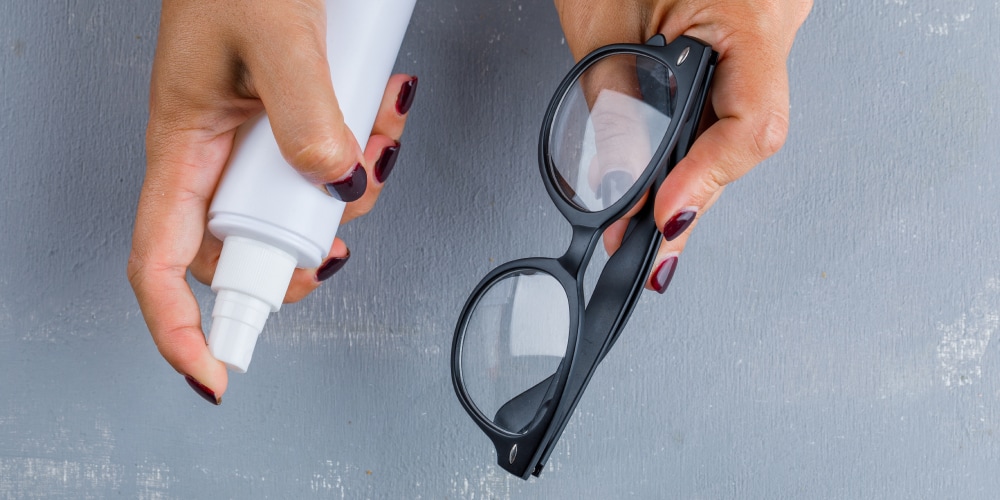
To clean glasses, rinse with lukewarm water, apply a drop of dish soap, gently rub lenses and frames, rinse thoroughly, and dry with a microfibre cloth. Never use paper towels, clothing, or window cleaner.
Clean glasses help you see clearly and keep your eyewear looking its best. Dust, fingerprints, skin oils, and everyday debris can build up on lenses and frames, causing smudges and reducing visual comfort. The right cleaning method can also help protect lens coatings and avoid unnecessary scratches.
Whether you wear prescription glasses, sunglasses, blue light glasses, or sports eyewear, the safest approach is simple: use water, mild dish soap, and a clean microfibre cloth.
This article was reviewed by the Glasses.com editorial team against verified sources including the American Academy of Ophthalmology (AAO), the American Optometric Association (AOA), and peer-reviewed clinical literature.
What is the best way to clean glasses?
The best way to clean glasses is to wash your hands first, rinse your lenses with lukewarm water, clean them with a small amount of lotion-free dish soap, rinse away residue, and dry them with a clean microfibre cloth.
Avoid cleaning glasses with dry tissues, paper towels, clothing, or household glass cleaners. These materials can leave behind lint or contain ingredients that may damage lens coatings over time.
How to clean glasses step by step
Follow these steps for safe daily cleaning:
1. Wash your hands before cleaning your glasses
Your hands collect oils, dirt, and skincare products throughout the day. Washing them first prevents transferring these substances onto your lenses.
Use clean hands and dry them with a lint-free towel before touching your glasses.
2. Rinse your glasses with lukewarm water
Hold your glasses under a gentle stream of lukewarm water. This removes loose dust and debris that could scratch the lenses when rubbed.
Avoid hot water because high temperatures may affect some lens coatings.
3. Apply a small amount of dish soap
Place a small drop of lotion-free dish soap on your fingertips. Gently rub both sides of the lenses.
A small amount is enough because concentrated dish soaps can create extra residue if too much is used.
4. Clean the lenses and frame gently
Use your fingertips to clean the front and back of each lens. Pay attention to areas where dirt often collects:
- Nose pads
- Frame edges around the lenses
- Hinges
- Temple arms
Avoid pressing too hard. Excessive force can place stress on frames and lenses.
5. Rinse and dry your glasses
Rinse away all soap under lukewarm water. Remaining soap can create streaks when the lenses dry.
Shake off excess water and gently dry your glasses with a clean microfibre cloth.
Microfibre cloths are recommended because they capture dust and oils without leaving many fibres behind. Wash your cloth regularly because a dirty cloth can spread debris back onto your lenses.
You may also like
How to clean glasses without streaks
Streaks usually happen because of leftover soap, oils, dirty cleaning cloths, or unsuitable products.
To clean glasses without streaks:
- Rinse lenses before wiping to remove dust.
- Use only a small amount of lotion-free dish soap.
- Rinse away all soap residue.
- Dry with a clean microfibre cloth.
- Inspect lenses under light to check for remaining marks.
Cleaning method
Recommended?
Why
Lukewarm water + mild dish soap
Yes
Removes oils and debris safely
Microfibre cloth
Yes
Helps reduce lint and scratches
Paper towels
No
May contain rough fibres that scratch lenses
Clothing or tissues
No
Can transfer oils and debris
Window cleaner
No
May contain chemicals unsuitable for lens coatings
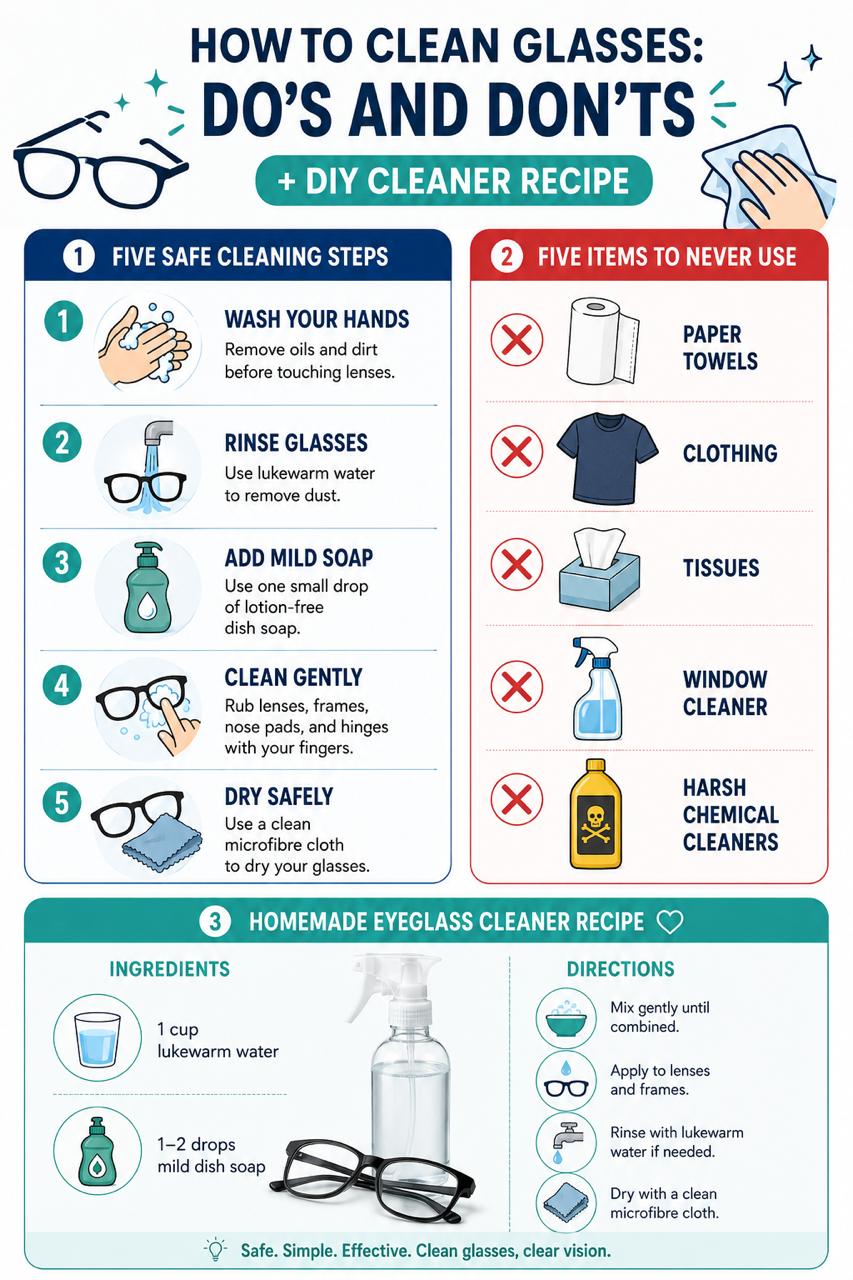
Can you make homemade eyeglass cleaner?
A homemade eyeglass cleaner can be made with water and a small amount of mild dish soap. The safest option for many coated lenses is still using products specifically designed for eyewear.
If you want a simple DIY eyeglass cleaner recipe:
Homemade eyeglass cleaner recipe
Ingredients:
- 1 cup lukewarm water
- 1–2 drops of lotion-free dish soap
Instructions:
- Mix the water and dish soap in a clean spray bottle.
- Apply a small amount to your lenses.
- Wipe gently with a clean microfibre cloth.
Avoid adding vinegar, alcohol, ammonia, or household cleaners unless recommended by the lens manufacturer.
How often should you clean your glasses?
Most glasses should receive a quick cleaning daily and a deeper cleaning about once a week, depending on how often they are worn.
Daily cleaning helps remove fingerprints, oils, and dust before they build up. A weekly deeper clean can help reach areas around nose pads, hinges, and frame edges.
Your cleaning schedule may need to increase if you:
- Work outdoors
- Exercise while wearing glasses
- Live in a dusty environment
- Frequently touch your lenses
How to clean glasses between the lens and frame
Dirt can collect in small spaces where the lens meets the frame. For these areas, use a clean cotton swab to gently remove debris around:
- Frame edges
- Hinges
- Nose pad supports
If your glasses need a deeper professional cleaning, an optician or eye care professional may have specialised equipment available.
For more information about lens issues, read: glasses scratches
How to clean sunglasses and blue light glasses
Sunglasses and blue light glasses can generally be cleaned using the same method as prescription glasses: lukewarm water, mild soap, and a microfibre cloth.
However, some lenses have special coatings, including:
- Anti-reflective coatings
- Scratch-resistant coatings
- Polarised coatings
- Blue light filtering treatments
Always check manufacturer recommendations before using cleaning products.
For sunglasses, avoid using cleaners designed for household glass because they may not be suitable for coated lenses.
How to keep glasses clean longer
Proper storage can reduce how often your glasses need cleaning.
Follow these tips:
- Store glasses in a protective case when not wearing them.
- Place lenses facing upward when setting glasses down.
- Keep your glasses case clean.
- Avoid putting lenses directly on tables or other surfaces.
- Handle glasses by the frame instead of touching the lenses.
Explore new frames and styles: eyeglasses
If your lenses develop visible damage, learn more: crazed lenses
Key Takeaways
- The safest way to clean glasses is with lukewarm water, mild lotion-free dish soap, and a clean microfibre cloth.
- Avoid paper towels, clothing, and household glass cleaners because they may damage lenses or coatings.
- Clean glasses daily to remove fingerprints, oils, and debris that affect clarity.
- A simple DIY eyeglass cleaner can use water and a small amount of mild dish soap.
- Proper storage in a clean case helps protect glasses between uses.
FAQ
Can I use soap and water to clean my glasses?
Yes. Mild dish soap and lukewarm water are commonly recommended for cleaning glasses. Use a small amount of lotion-free soap, rinse thoroughly, and dry with a clean microfibre cloth to avoid streaks.
What is the best homemade eyeglass cleaner?
The simplest homemade eyeglass cleaner uses lukewarm water and one or two drops of lotion-free dish soap. Avoid ingredients such as ammonia, vinegar, or household glass cleaners unless approved by your lens manufacturer.
How often should I clean my glasses?
Clean glasses daily to remove fingerprints, oils, and dust. A deeper cleaning once a week can help remove buildup around frames, hinges, and nose pads.
Can I clean my glasses with rubbing alcohol?
Avoid using rubbing alcohol on lenses unless specifically recommended by the manufacturer. Some coatings and frame materials may be affected by harsh chemicals.
Why do my glasses look cloudy after cleaning?
Cloudy lenses are often caused by soap residue, oils, or a dirty cleaning cloth. Rinse lenses thoroughly and use a clean microfibre cloth to improve clarity.