Choose from our wide range of
frames and lenses












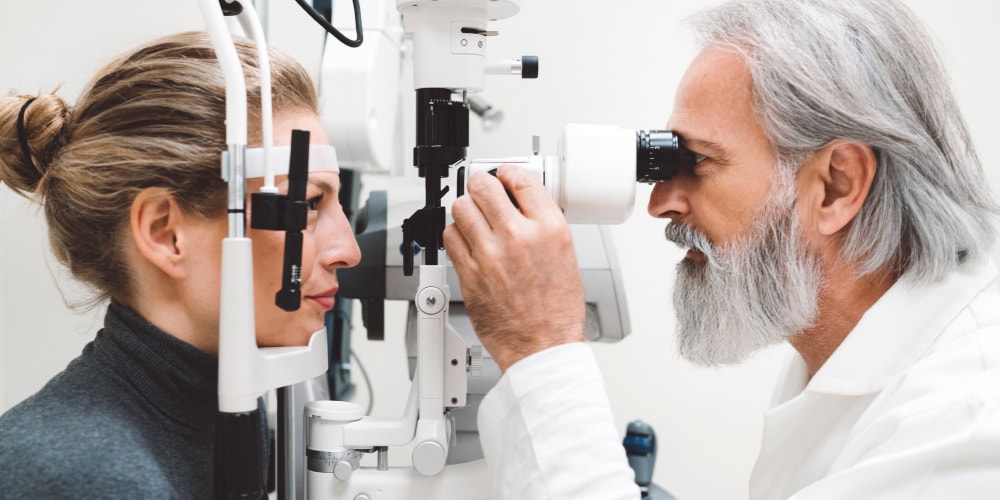
A fluorescein eye stain test uses an orange dye and UV light to detect surface damage on the cornea. It identifies corneal abrasions, ulcers, dry spots, and foreign body damage. The dye is safe, temporary, and washes away within an hour.
A fluorescein eye stain test is a common procedure used during eye exams when an eye doctor needs to check the health of the cornea, the clear front surface of the eye. The test can help identify injuries, irritation, infections, and problems linked to contact lens wear.
Many people wonder, "Why do they put dye in your eyes?" The dye helps doctors see areas that may not be visible during a standard eye exam. When the dye collects in damaged areas of the cornea, it highlights problems under a special blue light.
This article was reviewed by the Glasses.com editorial team against verified sources including the American Academy of Ophthalmology (AAO), the American Optometric Association (AOA), and peer-reviewed clinical literature.
What is a fluorescein eye stain test?
A fluorescein eye stain test is an eye examination that uses fluorescein dye to check the cornea and tear film. During the test, an eye doctor applies a small amount of orange-colored dye to the eye and examines it with a cobalt-blue light.
The cornea is the clear outer layer of the eye that helps focus incoming light and protects the eye from dust, germs, and other irritants. Because the cornea has no blood vessels, it relies on tears to provide moisture and nutrients.
Fluorescein staining for corneal abrasion is especially useful because scratches and damaged areas absorb the dye and become easier to identify.
Common reasons an eye doctor may perform this test include:
- Checking for corneal abrasions or scratches
- Finding small foreign particles in the eye
- Evaluating dry eye-related surface damage
- Checking whether contact lenses are irritating the cornea
- Looking for signs of corneal ulcers or infection

You may also like
Why do they put dye in your eyes during an eye test?
The dye used in a fluorescein eye stain test does not change or improve your vision. Instead, it acts as a temporary marker that helps your eye doctor see irregularities on the eye's surface.
When the cornea is healthy, fluorescein spreads evenly across the tear film. When there is damage, the dye highlights areas where the surface is uneven or where cells have been disrupted.
The test may help detect:
Eye finding
What fluorescein may show
Corneal abrasion
A scratch or damaged area on the cornea
Dry eye damage
Areas where the eye surface lacks proper moisture
Foreign body irritation
Damage caused by dust, debris, or particles
Corneal ulcer
Areas that may require further medical evaluation
How is the fluorescein eye stain test performed?
The procedure is quick and usually takes only a few minutes. Your eye doctor may apply fluorescein dye using a small strip of paper or eyedropper.
The typical steps include:
- The doctor places a small amount of fluorescein dye on the surface of your eye.
- You blink several times so the dye spreads across your tear film.
- The doctor examines your eye using a slit lamp or another specialized microscope.
- A cobalt-blue light makes damaged areas appear bright and easier to identify.
You may feel mild stinging when the dye is applied, but this sensation usually disappears quickly. Your eye may temporarily look yellow because of the dye.
What does a positive fluorescein test mean?
A positive fluorescein test means the dye has highlighted an area of concern on the eye's surface. It does not automatically mean you have a serious eye condition. Your eye doctor will interpret the results along with your symptoms and medical history.
Possible causes of a positive test include:
- A corneal scratch from rubbing your eye or contact with an object
- Contact lens-related irritation
- Dry eye-related surface damage
- Foreign material trapped in the eye
- Possible corneal infection
If contact lenses are contributing to corneal irritation, your eye doctor may recommend changing your lens routine or considering other vision correction options, such as eyeglasses.
Does the fluorescein eye stain test affect your vision?
The fluorescein eye stain test does not permanently affect your vision. After the procedure, some people notice temporary yellow coloring, mild blurriness, or sensitivity depending on whether other parts of the eye exam were performed.
The dye usually clears as your tears wash it away. Most people can return to normal activities soon after the test.
If you notice ongoing changes in vision, eye pain, redness, or worsening symptoms after an eye exam, contact an eye care professional for advice.
How often should you have eye health checks?
The frequency of eye exams depends on factors such as your age, vision needs, health history, and risk of eye conditions. Regular exams can help detect changes before they become more serious.
Eye exams may include vision tests, such as a Snellen eye chart assessment, and other evaluations based on your needs. Learn more about vision testing with this Snellen eye chart.
Your prescription can also change over time. Understanding your prescription information can help you make informed decisions about your eyewear. Read more about glasses prescription.
Frequently Asked Questions
What is a fluorescein eye stain test used for?
A fluorescein eye stain test is used to identify damage or irregularities on the cornea. It can help detect corneal abrasions, dry spots, foreign bodies, and other surface problems that may require treatment.
Is fluorescein dye safe for eyes?
Yes. Fluorescein dye is generally considered safe when used by eye care professionals during an eye examination. It is temporary and is removed naturally through tears.
What does the dye do in an eye test?
The dye highlights areas where the corneal surface is damaged or uneven. Under cobalt-blue light, these areas become clearly visible to your eye doctor.
How long does fluorescein stay in your eye?
Fluorescein dye is temporary and usually clears as tears wash it away. In many cases, the yellow color disappears within minutes to an hour.
Can a fluorescein eye stain test find a corneal abrasion?
Yes. Fluorescein staining for corneal abrasion is one of the main reasons doctors use this test. Scratches on the cornea absorb the dye and become visible under blue light.
Key Takeaway
- A fluorescein eye stain test uses orange dye and cobalt-blue light to examine the cornea's surface.
- The test can help detect corneal abrasions, dry eye damage, foreign bodies, and other surface issues.
- Fluorescein dye is temporary and is normally cleared naturally by tears.
- A positive test result helps an eye doctor identify areas that may need further evaluation or treatment.