Choose from our wide range of
frames and lenses







The fastest way to find your glasses frame size is to grab a pair you already wear and read the arm. Printed inside, in tiny engraved digits, is a string like 52▢18-140 that describes the frame in millimeters. A pair that already fits well is the most reliable size guide you have, so here is how to read that string, measure your own frames and then shop confidently by size.
Start with the frames you already own
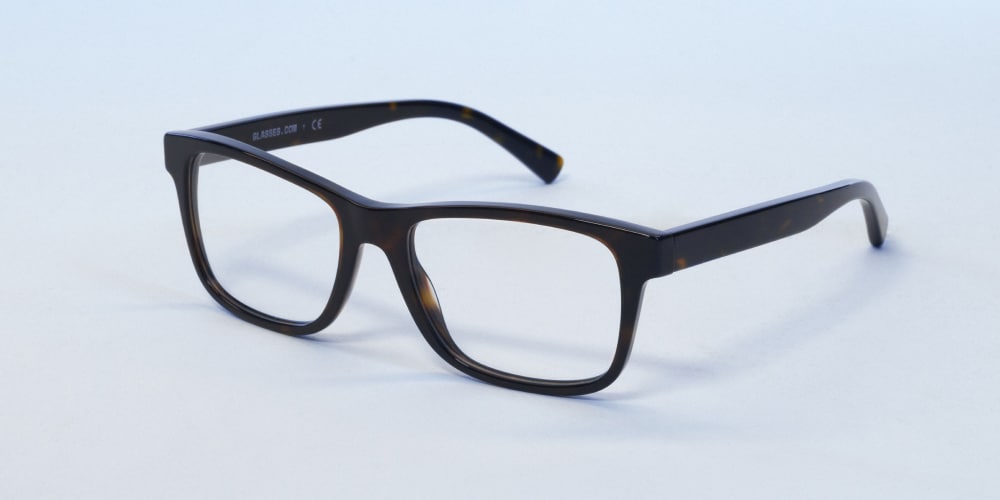
The quickest route to your size is a frame that already fits well, so pick it up and look along the inside of the left arm, the part that runs back over your ear. You will find a short string like 52▢18-140 printed in white or engraved lettering, and that is the frame's measurement set that you copy instead of guessing from your reflection in a mirror. In 52▢18-140, the 52 is a 52 mm lens width, the 18 is an 18 mm bridge width and the 140 is a 140 mm temple length.
Our product pages list the same measurements for each frame, so yours become a shopping key. A good fit sits level, grips without pinching and leaves no red marks after a long day. If a pair does all of that you have a working answer, so keep that frame nearby while you shop and compare new styles back to it.
One habit helps first: wear the old pair for a few minutes before you trust its numbers. A frame that slides down or presses behind the ears is telling you a measurement is off.
What the three numbers mean
The measurements always run in the same order, reading left to right as lens width, bridge width, then temple length, so learn that order once and every frame in the world reads the same way.
| Measurement | What it is | Typical range |
|---|---|---|
| Lens width (eye size) | Width of one lens at its widest point | 40 mm to 62 mm |
| Bridge width | Gap between the two lenses, over the nose | 14 mm to 24 mm |
| Temple length | Hinge to the tip that curves behind the ear | 120 mm to 150 mm |
You may also like
Lens width, also called eye size, is the width of one lens at its widest point, and it does the most to set how wide a frame sits across your face. Bridge width is the gap between the two lenses that rests on your nose, and it decides whether a frame perches too high or slips too low. Temple length is the full length of the arm from the hinge to the tip, and it governs how the frame hooks behind your ear.
A small square or a dash separates the lens width from the bridge width. Another dash sits in front of the temple length, which usually steps in 5 mm jumps, so you will see 135, 140 or 145 far more often than the numbers in between. Some frames add a fourth number, the lens height in millimeters, which matters most for progressive lenses that need vertical room for the reading zone.
How to measure a pair yourself
Maybe the printed figures have worn off, or you just want to double-check them, in which case a ruler marked in millimeters does the job on any flat surface. Measure the frame itself, not the lens inside it, and round to the nearest millimeter.
- Lens width: measure straight across one lens at its widest point, from one inside edge of the rim to the other. Most frames land between 40 mm and 62 mm.
- Bridge width: measure the gap between the two lenses at their closest point. This usually falls between 14 mm and 24 mm.
- Temple length: open one arm flat and measure from the hinge screw to the tip. The most common adult sizes land between 135 mm and 145 mm.
Two mistakes throw the numbers off: measuring the glass instead of the frame rim, and letting the ruler drift at an angle across the lens. Keep the ruler flat and level across the widest part, and your reading will be honest. If a number lands between two common sizes, trust the lens width first, because it sets the overall width. A ruler in inches works in a pinch, but every frame is labeled in millimeters, so a cheap millimeter ruler saves you a conversion and a rounding mistake.
When you have no pair to measure
Buying your first glasses, or working from a pair that never really fit? Then you measure yourself instead of a frame, and the number that matters most is your face width. Face a mirror and measure straight across your face at your temples, from the outer edge of one temple to the outer edge of the other, level with your eyes. Don't measure ear to ear, which runs too wide. A frame tends to sit well when its total width, outer edge to outer edge across the front, roughly matches your temple width. A narrower face points toward small or extra small, while a wider one points toward large.
Virtual try-on closes the gap when a number alone feels abstract. Our tool maps a frame onto a live image of your face, so you can see whether a 52 mm lens width sits where you want it before you commit. Pair the try-on with your measured face width and you get both the feel and the figures, which is the closest thing to trying frames on at a counter.
Turn your numbers into a size, from XS to XL
If a page of three-number strings makes your eyes glaze over, size bands are the shortcut. Most of a frame's feel comes down to its total width across your face. So we sort frames into bands rather than asking you to memorize three separate figures. On Glasses.com those bands run extra small, small, standard, large and extra large, and standard is the most common fit.
Lens width and bridge width together decide which band a frame falls into, so a narrow pair suits a smaller face, like the acetate Persol PO3007V that comes in extra small. Our own Glasses.com frames sit in the popular middle of the range, with the acetate GK2002 in small and the metal GK1001 in standard. Wider styles climb the scale, like the metal Oakley OX3133 in large or the acetate Ray-Ban RX5279 in extra large, both built for broader faces. Match your lens width to a band and hundreds of frames shrink to a short, wearable list.
The bands are a starting filter and not the final word, because shape still changes how a frame feels, so treat the band as the shelf you browse and the three printed numbers as the way you choose.
Using your size to shop online
Once you have a size, filter by it on the frame pages and open the styles you like. Line up the lens width first, then the bridge, then the temple length, and you will know how a frame sits before it ships.
Material changes how much a number can flex once the frame reaches you. Acetate frames, like many Persol and Burberry styles, are molded to shape and hold it, so the numbers you read are close to what you get. Metal frames, such as the Oakley OX3133 or our own GK1001, often have adjustable nose pads and arms that an optician can bend for a few millimeters of give. Temple length deserves respect either way, because the arm controls how the frame holds. Too short and it pinches behind the ear, too long and the whole frame slides forward.
Caught between two sizes? Start with the band that matches your lens width, then let the bridge decide. Browse the full eyeglasses collection, or go straight to men's and women's frames and filter by size. The same measurement string works on sunglasses too. One quick read inside your current arm sets you up for every pair you buy next.
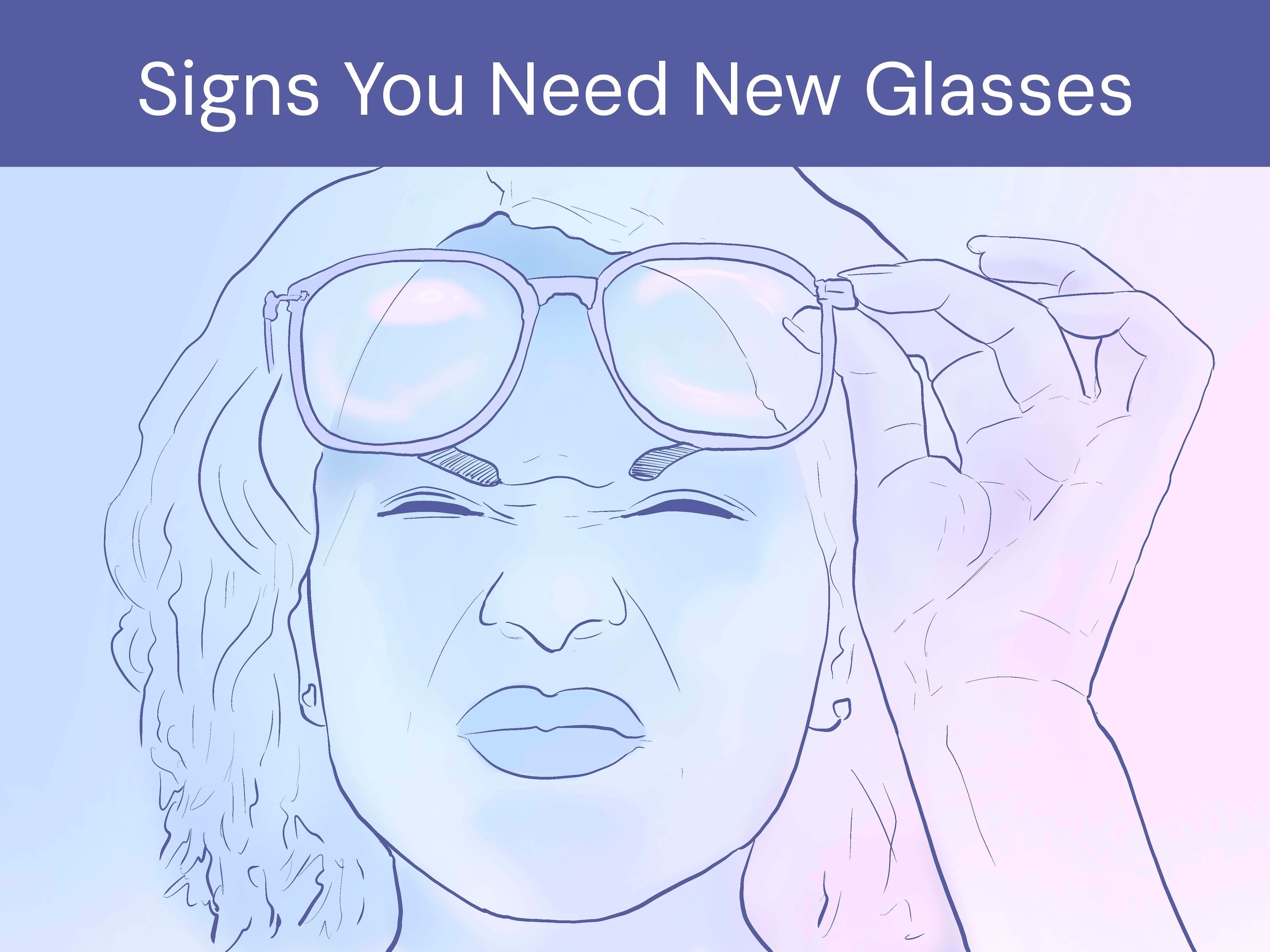
If you think you need new glasses, you may be right. Timing typically depends on changes in your vision, eye health, lifestyle, or style preferences. Increased wear and tear on your frames and lenses can also result in the need for a new pair.
The best way to know it’s time for new glasses is to see your eye doctor each year for a comprehensive eye exam . They’ll check your vision and eye health and ensure your vision prescription is up to date. If you experience any symptoms or issues between routine exams, don’t hesitate to schedule an earlier appointment — they could indicate other health issues.
Read on to learn some common signs that you may need new glasses.
Blurry Vision
You wear glasses to see clearly at various distances, such as for up close activities like looking at your phone, at arm’s length for working on a computer, or far away activities like driving. If your vision is blurry at any distance while wearing your glasses, it may be time for a new prescription.
Blurry vision can be caused by conditions such as:
- Nearsightedness (myopia) – Trouble seeing clearly far away
- Farsightedness (hyperopia) – Blurry vision up close
- Astigmatism – Blurry vision at all distances
- Presbyopia – Farsightedness that usually starts around age 40 and is a natural part of aging
Frequent Headaches
Headaches can also be a sign that you need new glasses. An expired prescription can give you a headache because your eyes have to work harder so you can see clearly.
Headaches also can be caused by other vision problems like eye strain.
Squinting
If you’re squinting to bring things into focus while wearing your glasses, your prescription may need some fine-tuning
Frequent squinting can cause headaches. It can even make age-related wrinkles around your eyes and forehead appear more quickly.
Double Vision
Double vision, also called diplopia, can result when the eyes are not correctly aligned. It can also be a sign of other serious eye or health problems.
Double vision caused by misaligned eyes can often be treated with glasses. Your eye doctor may be able to prescribe prism correction in the lenses, which can bend and redirect light before it reaches the eye. This focuses light on the right spot on the retina so you see one image from both eyes instead of two.
You may also like
Light Sensitivity
Light sensitivity, also called photophobia, is when exposure to bright light can feel uncomfortable or even painful.
Astigmatism is one reason your eyes might be sensitive to light and could be a sign that you need a new glasses prescription.
It often takes the eyes longer to adjust from light to dark environments and vice versa as people age. If this is true for you, consider Transitions lenses. They automatically darken when exposed to bright light and fade back to clear indoors to make this transition more comfortable for your eyes
Poor Night Vision
Poor night vision can arise from several different causes. For example, seeing halos around lights could indicate astigmatism, which might suggest the need for a new glasses prescription. It’s also common to have trouble seeing at night as you age.
Glasses with anti-reflective lenses can help you see better at night. These lenses help prevent glare and reflections from reaching your eyes. They can also reduce starbursts, halos, and other visual distractions for safer night driving.
Overdue for an Eye Exam
If it’s been more than a year since you had an eye exam, consider making an appointment with your eye doctor.
Your vision can change over time, and regular eye exams are essential to monitor these changes and ensure your prescription is up to date. During your exam, your eye doctor will test your vision and look for eye health problems.
Eye care professionals generally recommend getting an eye exam once per year. You may need to go more often based on your age, medical history, and if you wear glasses or contact lenses. Your eye doctor can help determine how often you need new glasses based on any changes in your eye prescription.
Lens and/or Frame Damage
Regular wear can damage your lenses and frames in the following ways:
- Lenses can get scratched and the coating can be damaged. This can make them hard to clean and to see through clearly.
- Frames can become bent, broken, loose, or worn out. It’s hard to see comfortably if your frame doesn’t fit you well.
A New Job
You might need new glasses for a new job. For example, if you’ll be using a computer for several hours a day, you might want anti-reflective lenses to help keep your eyes comfortable.
If you’ll be spending a lot of time outside, consider prescription sunglasses with polarized lenses . These lenses reduce glare from the sun to enhance your visual comfort outdoors.
Lens Upgrade
Eyeglass lenses continually advance to give wearers the best possible vision. New lenses may be able to help you see more clearly and comfortably.
Style Update
It’s not necessary to have a new prescription or damaged glasses to get a new pair. Treat yourself to those designer frames you’ve had your eye on or invest in higher-quality lenses. New eyeglasses can improve your vision and give your self-confidence a boost.
When it comes to style, there are no rules around how often you should get new glasses. You can switch up your look with new frames as often as you change your outfits if you prefer!
If it’s time for new glasses, we’ve got you covered. We have an extensive selection of frames and lenses to help you see clearly and look great.