Choose from our wide range of
frames and lenses











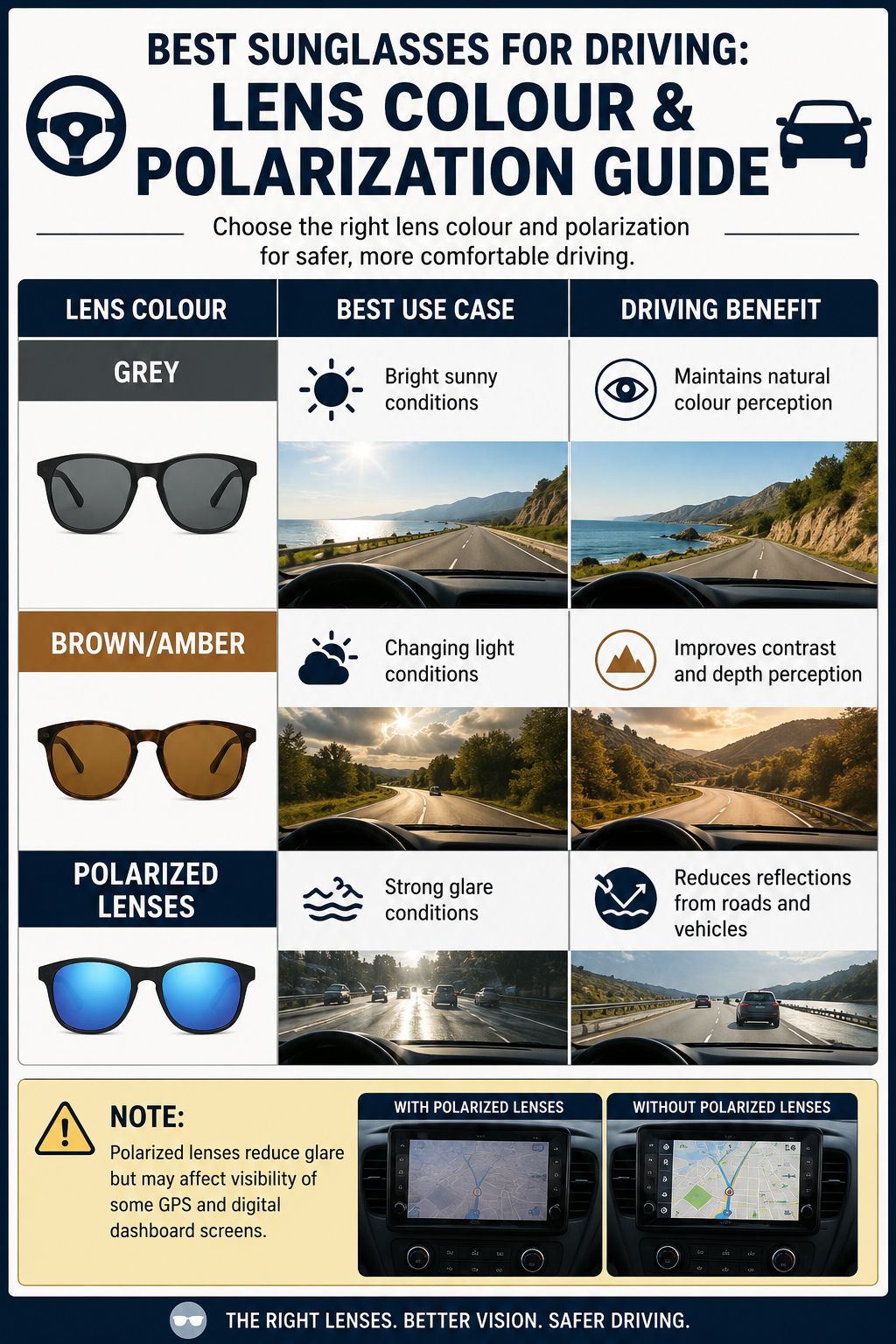
The best sunglasses for driving have grey or brown/amber lenses for accurate colour perception and glare reduction. Polarized lenses reduce glare but can interfere with reading GPS and digital dashboard screens.
Driving in bright sunlight can make it harder to see clearly. Glare from roads, vehicles, and reflective surfaces can reduce comfort and make your eyes work harder. Choosing the right sunglasses can help improve visual comfort while protecting your eyes from harmful ultraviolet (UV) rays.
The best sunglasses for driving are designed to balance three key needs: reducing glare, maintaining accurate colour vision, and providing UV protection. The right choice depends on your driving habits, your vision needs, and whether you prefer polarized or non-polarized lenses.
This article was reviewed by the Glasses.com editorial team against verified sources including the American Academy of Ophthalmology (AAO), the American Optometric Association (AOA), and peer-reviewed clinical literature.
What are the best sunglasses for driving?
The best sunglasses for driving typically have grey, brown, or amber lenses, full UV protection, and a comfortable frame that does not block your peripheral vision. These features help reduce brightness while allowing you to identify important road signals and surroundings.
When choosing driving sunglasses, look for:
- UV protection: Sunglasses should block 100% of UVA and UVB rays. Long-term UV exposure can contribute to eye conditions such as cataracts and other eye health concerns.
- A suitable lens colour: Grey and brown/amber lenses help preserve natural colour perception.
- Glare reduction: Polarized lenses or anti-reflective coatings may help reduce distracting reflections.
- A comfortable frame design: Thin or medium-width frames can help maintain your side vision while driving.
- The correct prescription: If you need vision correction, your sunglasses should match your current prescription.
 >
>You may also like
What colour lens is best for driving?
The best lens colours for driving are grey and brown/amber because they reduce brightness while helping maintain accurate colour recognition.
Different lens colours affect how light reaches your eyes. Some colours may change how traffic lights, road signs, and other important visual information appear.
| Lens colour | Benefits for driving | Considerations |
|---|---|---|
| Grey | Reduces brightness while maintaining natural colour perception | May provide less contrast enhancement than brown lenses |
| Brown/Amber | Improves contrast and depth perception in many lighting conditions | May slightly warm colour appearance |
| Green | Reduces glare and maintains some colour balance | Less commonly recommended for driving |
| Blue, pink, or red | Can affect colour recognition | Generally not preferred for road use |
For most drivers, grey or brown/amber lenses are the safest general choices because they reduce glare without significantly changing how colours appear.
Are polarized sunglasses good for driving?
Polarized sunglasses can be good for driving because they reduce glare from flat reflective surfaces such as roads, water, and car hoods. This can make driving more comfortable, especially on bright sunny days.
However, polarized lenses are not always the best option for every driver. Polarization can sometimes make it harder to see certain digital displays, including some GPS screens and dashboard displays that use LCD technology.
The best polarized sunglasses for driving should combine:
- Polarized lenses for glare reduction
- A grey or brown/amber tint for colour accuracy
- UV protection for eye health
- A comfortable frame that supports a clear field of vision
Drivers who frequently use digital navigation systems may prefer testing polarized lenses before choosing them as their everyday driving sunglasses.
What are the best anti-glare driving glasses?
The best anti-glare driving glasses reduce reflections that can distract your eyes while driving. Anti-reflective coatings and polarized lenses are two common options for managing glare.
Anti-reflective coatings work by reducing reflections on the lens surface. They can be useful for prescription sunglasses because they improve light transmission and reduce distracting reflections.
Polarized lenses work differently. They filter certain types of reflected light, especially glare from horizontal surfaces such as roads.
For many drivers, the ideal combination is:
- Grey or brown/amber lenses
- 100% UV protection
- Anti-reflective coating
- A comfortable frame shape
- The correct prescription if needed
Should you wear transition lenses while driving?
Transition lenses, also known as photochromic lenses, darken when exposed to UV light and become clear indoors. They can be convenient for people who regularly move between indoor and outdoor environments.
However, many modern vehicle windshields block a large amount of UV light, which may limit how much some photochromic lenses darken inside a car.
For frequent drivers, dedicated prescription sunglasses may provide more consistent tint and glare control behind the wheel.
How to choose sunglasses for long drives
Long drives require sunglasses that remain comfortable for several hours. The wrong pair can cause pressure points, eye fatigue, or distractions.
Before choosing sunglasses for driving, consider:
- Your driving environment: City driving, highways, and rural roads may have different glare conditions.
- Time of day: Morning and evening sunlight can create strong glare from low angles.
- Your prescription needs: Prescription sunglasses can provide both vision correction and sun protection.
- Your frame style: Avoid oversized frames that may limit side vision.
- Your lens coating: Anti-reflective coatings may improve comfort.
Which sunglasses brands are popular for driving?
Many established eyewear brands offer sunglasses designed for comfort, durability, and everyday wear. The best choice depends on your personal style, lens preferences, and vision requirements.
Popular options include:
- Ray-Ban sunglasses, known for classic designs and everyday wear.
- Oakley sunglasses, designed with performance and active lifestyles in mind.
- Persol sunglasses, known for craftsmanship and distinctive designs.
The most important factor is not the brand name alone. Lens quality, UV protection, fit, and visibility while driving matter most.
Frequently Asked Questions
Are polarized sunglasses good for driving?
Yes, polarized sunglasses can be good for driving because they reduce glare from reflective surfaces such as roads and vehicles. However, they may make some LCD dashboard screens or GPS displays harder to read.
What lens colour is best for driving in sunlight?
Grey and brown/amber lenses are generally considered the best lens colours for driving because they reduce brightness while helping maintain accurate colour perception.
Can polarized sunglasses interfere with your GPS?
Yes. Some polarized lenses can interfere with certain LCD screens, including some GPS devices and digital dashboards. Drivers who rely heavily on digital displays should test polarized sunglasses before buying.
What are the best anti-glare driving glasses?
The best anti-glare driving glasses usually include UV protection, grey or brown/amber lenses, and glare-reducing features such as polarization or anti-reflective coatings.
Key Takeaways
- Grey and brown/amber lenses are among the best choices for driving because they reduce brightness while maintaining colour recognition.
- Polarized sunglasses can reduce road glare but may interfere with some GPS and digital dashboard screens.
- The best driving sunglasses should provide 100% UV protection and maintain a clear field of vision.
- Frame fit, prescription accuracy, and lens coatings are important factors when choosing driving sunglasses.